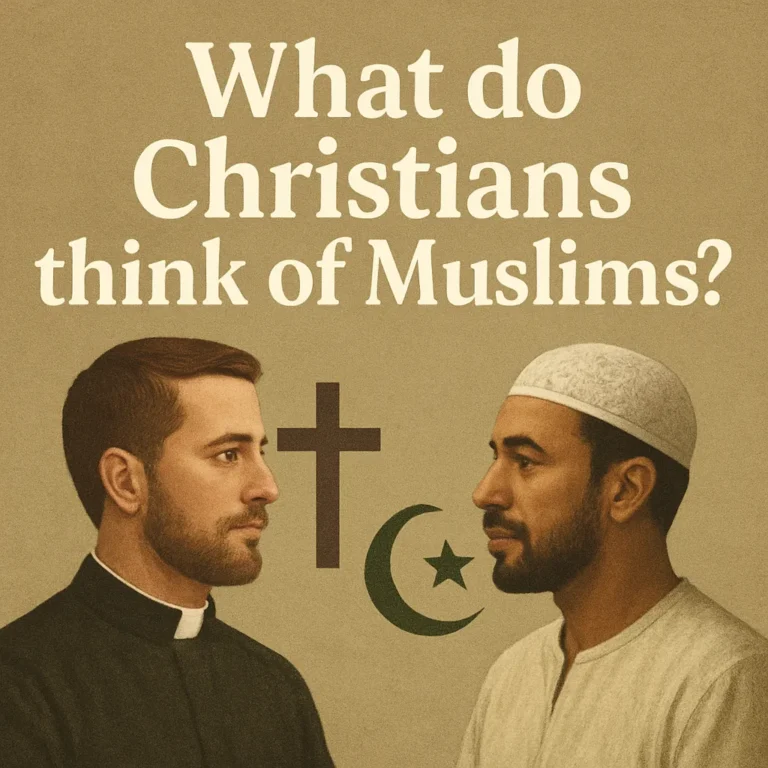
What Do Christians Think of Muslims? A Respectful Guide to Christian Perspectives on Islam
Across centuries and continents, Christians and Muslims have met in places of worship, marketplaces, schools, and government offices. The question and the curiosity behind it—what do Christians think of Muslims?—is not a single, simple answer. Christian perspectives on Islam vary by tradition, culture, and personal experience, and they can evolve as people engage in sincere dialogue. This article aims to present a broad, respectful, and historically informed guide that helps readers understand how different Christian communities frame the relationship with Islam, what they celebrate as shared ground, and how they navigate disagreements in a way that honors the dignity of every person.
What Do Christians Think of Muslims? A Framing Note on Diversity
When people ask what do Christians think of Muslims?, they are touching on a spectrum rather than a single verdict. You will encounter:
Ecumenical optimism about friendship, collaboration in service to the vulnerable, and mutual understanding.
Critical concerns about doctrinal differences that matter to faith claims—especially regarding the nature of Jesus, scripture, and soteriology.
Historical memory of conflict, conquest, and political power that shapes present attitudes and policies.
Personal relationships that reform stereotypes through hospitality, dialogue, and shared projects.
In exploring Christian perspectives on Islam, it helps to distinguish between theological anthropology (what is believed about God, humanity, and salvation) and ethical conduct (how people treat one another, pursue justice, and care for the neighbor). This article foregrounds respect, truth-telling, and humility as essential features of any fruitful conversation.
Historical Context: From Early Encounters to Modern Dialogue
The relationship between Christianity and Islam has deep roots that begin in late antiquity and deepen through the medieval period, the age of colonization, and the modern era of pluralism. The two faiths share a common ancestral story in the Abrahamic tradition, revering figures such as Abraham and recognizing some overlapping moral teachings. Yet the path each tradition took diverged on central proclamations—most notably regarding Jesus of Nazareth and the nature of divine revelation.
In many eras, Christians and Muslims cooperated for the common good—caring for the poor, defending the oppressed, pursuing education, and preserving libraries and urban life. In other periods, political rivalries, colonization, and competition for resources produced distrust or even hostility. Today, many Christians and Muslims seek to foster interfaith dialogue as a way to heal wounds, build solidarity against violence, and celebrate shared values such as compassion, justice, and peace.
Core Doctrinal Dialogues: Where Do You Stand on Key Truth Claims?
Monotheism and the Nature of God
One of the most prominent threads in Christian-Muslim conversation concerns monotheism and how God is described in each faith. Christians affirm the doctrine of the Trinity (Father, Son, and Holy Spirit) as a central mystery of faith, while Muslims emphasize strict tapeinto on the oneness of God (tawhid). Respectful dialogue acknowledges these differences without reducing either faith to caricature.
It is common for Christians to recognize that both communities worship the same singular, sovereign God in ways that reflect distinct theological vocabulary. The hope offered in such conversations is not to erase differences but to honor shared devotion to the one God who created the world and who desires human flourishing.
A central area of disagreement concerns the person of Jesus. Christians profess that Jesus is the incarnate Son of God, whose life, death, and resurrection bring salvation. Muslims regard Jesus as a revered prophet and messenger, but they do not attribute to him divinity. This difference can be a source of tension, yet many in both faiths view it as a doctrinal distinction rather than a justification for contempt.
In fruitful dialogues, Christians may emphasize the shared high regard for Jesus as a moral teacher and a central figure in salvation history, while clearly articulating why their Christology differs. Muslims may, in turn, acknowledge the impact of Jesus as a transformative religious figure in history.
Scripture and Revelation
The question of sacred scripture shapes much of the conversation. Christians typically point to the Bible—Old and New Testaments—as the authoritative canon through which God reveals truth. Muslims point to the Qur’an as the final revelation, understood through the lens of God’s unchanging will. In dialogue, it is helpful to recognize each tradition’s claims about revelation in a constructive way, avoiding reductive comparisons that erase the complexity of how scripture guides life, worship, and ethics in both communities.
Salvation, Grace, and Works
Views on salvation and how humans relate to God vary. Christianity has a spectrum from grace-centered positions (salvation by faith through grace) to traditions that emphasize faith formed by obedient living. Islam emphasizes submission to God’s will and a path of righteous deeds grounded in the Qur’anic guidance and the example of the Prophet Muhammad.
In respectful conversations, Christians often affirm that Muslims, like Christians, seek to live morally and to honor God, and they acknowledge that people from many faith backgrounds pursue virtue and justice. The differences about how salvation is secured invite careful, patient dialogue rather than quick judgments.
Major Christian Traditions and Their Perspectives on Islam
The Catholic Tradition
Catholic engagement with Islam has a long history of learning from and dialoguing with Muslims. The Second Vatican Council and subsequent papal statements have encouraged interfaith dialogue, emphasizing the shared dignity of all human beings, the defense of religious freedom, and the pursuit of peace. Catholic approach often emphasizes:
Honoring the inalienable dignity of every person, regardless of faith.
Engaging in common action on issues like poverty, refugees, and violence against the innocent.
Respectful theological conversation that acknowledges difference while seeking common ground on moral and social questions.
Orthodox Christians typically emphasize continuity with patristic traditions and a high regard for mystical prayer, liturgical depth, and the remembrance of the saints. Orthodox dialogue with Islam often centers on sharing experiences of prayer, mutual hospitality, and joint efforts for peace. Theological differences are acknowledged, but there is a robust sense of fraternity with Muslims as fellow human beings who worship the same one God.
Protestant and Evangelical Perspectives
Among Protestants and evangelicals, there is wide variation. Some communities emphasize witness and mission, seeking to share the Christian message with Muslims, while others prioritize interfaith dialogue as a path to mutual understanding and cooperation. Key distinctions include:
Varieties of emphasis on missionary work and religious liberty.
Different approaches to religious pluralism and how to relate to Muslims in diverse societies.
Commitments to social justice and peacemaking as expressions of the gospel.
Common Ground: Shared Values and Mutual Respect
Despite differences, there are meaningful areas where Christians and Muslims can stand together. Building bridges in these areas helps illuminate what many people mean when they ask “what do christians think of muslims?” in the best possible sense—an invitation to encounter one another with humanity and hope.
Monotheism with reverence for the one God who is just and merciful.
Compassion for the vulnerable—the poor, the orphan, refugees, the sick, and the elderly.
Prayer and worship as expressions of longing for God’s presence and guidance.
Justice and mercy in social policy, law, and community life.
Peaceful coexistence in plural societies and the protection of religious freedom for all people.
Areas of Respectful Dialogue: How to Talk About Each Other
When Christians reflect on what do christians think of muslims in the present day, several practical principles emerge for respectful dialogue:
Humility in acknowledging the limits of one’s own perspective and the truth claims of others.
Listening more than speaking—seeking to understand how Muslims interpret faith and life.
Truth-telling about doctrinal differences, done with charity and without coercion.
Hospitality in daily life—sharing meals, conversation, and acts of service.
Joint action for common goods such as education, healthcare, and anti-violence initiatives.
Theological Differences and Their Ethical Implications
It is important to distinguish differences in belief from disrespect for persons. The challenge for Christians and Muslims alike is to hold doctrinal convictions firmly while honoring the inherent dignity of neighbors who hold different beliefs. Treating others with charity, upholding religious freedom, and committing to nonviolence are ethical commitments that many Christians view as essential to the gospel.
Practical Engagement: From Local to Global
On the ground, Christians and Muslims engage with each other in many settings:
In local churches and mosques that collaborate on community service projects.
In schools and universities where scholars compare the texts and beliefs of both traditions.
In interfaith councils that address issues such as climate change, poverty, and public safety.
In refugee and immigrant assistance programs that welcome people who come from Muslim-majority contexts.
Misconceptions and Stereotypes: Separating Myths from Reality
It is common for popular discourse to rely on stereotypes. A constructive approach to answering what do christians think of muslims involves identifying and correcting misconceptions while highlighting genuine diversity within Christian communities.
Myth: Christians think Muslims are inherently dangerous. Reality: Large numbers of Christians reject violence and advocate for peace; many Christians recognize the humanity of Muslims and condemn terrorism carried out in the name of religion.
Myth: All Muslims share the same beliefs and practices. Reality: Islam is not monolithic; there are diverse traditions, cultures, and interpretations within the Muslim world.
Myth: Muslims do not respect Jesus or Christian beliefs. Reality: Muslims venerate Jesus as a prophet; Christians can explore shared reverence for Jesus while maintaining doctrinal distinctions.
Myth: Interfaith dialogue weakens faith. Reality: For many believers, dialogue strengthens faith through witness, hospitality, and the experience of God at work in others.
A constructive response blends doctrinal clarity with ethical humility. Here are some guiding principles for Christians who want to engage with Muslims in a manner that honors both truth and love:
Center the dignity of every person—see Muslims as neighbors created in God’s image, worthy of respect.
Be credible witnesses to one’s own faith without coercion or contempt.
Prioritize shared action on social issues where cooperation yields tangible benefits for the vulnerable.
Study** together—read shared texts or comparative writings in a spirit of curiosity and mutual learning.
Pray for peace and seek reform where violence, discrimination, or injustice persists in any community.
Invite a Muslim neighbor to a meal or a cultural exchange to break down barriers and build friendship.
Attend or host an interfaith iftar or Ramadan event to learn about fasting and spiritual discipline in Islam.
Participate in community service projects together—food drives, blood donation, shelter programs, or environmental initiatives.
Invite Muslim speakers to share perspectives on faith, justice, and daily life.
Hold dialogues that focus on shared values such as charity, hospitality, and mercy.
What It Means to Speak Well on Sensitive Topics
When discussing sensitive topics—such as doctrinal differences, religious liberty, or political tensions—Christians are called to speak with charity, to avoid blanket judgments, and to protect the dignity of those who hold different beliefs. This approach helps to prevent generalizations that can wound and hinder genuine relationship-building.
The way Christians talk about Islam and Muslims matters. Language shapes perception and can either open doors or close them. Some guidelines to keep in mind include:
Avoid dehumanizing phrases; always refer to people as individuals with names and histories, not as a monolithic group.
Use precise terms when discussing beliefs—acknowledge the diversity within Islam while explaining central tenets with accuracy.
If you are unsure about a belief, ask respectful questions instead of assuming.
Center acts of love and service as common ground where both faiths visibly care for the neighbor.
Throughout this article we’ve touched on several phrasing variants to broaden the semantic field of the central question. Here are additional formulations that illustrate how Christians think about intertwined faiths in different contexts:
How do Christians view Islam?—A general inquiry into beliefs, practices, and relationships.
What are Christian attitudes toward Muslims?—Emphasizing disposition, respect, and reactions to Muslims as people.
What do Christian communities believe about Islam?—Highlighting denominational differences and common ground.
How should Christians relate to Muslims?—A focus on conduct, ethics, and social engagement.
What is the Christian perspective on interfaith dialogue with Muslims?—Exploring dialogue as a method of witness and service.
What is the Christian stance on theological differences with Islam?—Acknowledging doctrinal divergence while pursuing peaceful coexistence.
The overarching aim for Christians in relation to Muslims is not merely to defend doctrinal positions but to embody the love of Christ in every encounter. This requires a renewed commitment to:
Hospitality that welcomes strangers and treats them as neighbors, not threats.
Mercy shown across borders, languages, and cultures—to the refugee, the migrant, and the vulnerable alike.
Truth-telling that is honest yet gracious, clear about beliefs while avoiding contempt.
Peace-building through collaboration on common goods and the strongest possible rejection of violence in all forms.
Mutual accountability—holding one another to ethical standards that protect human dignity and promote justice.
The question “What do Christians think of Muslims?” is best approached as an invitation to deeper understanding, not a rhetorical battleground. While Christians may differ on doctrinal matters—such as the nature of Jesus, the authority of scripture, and the path of salvation—there is a shared calling to pursue peace, justice, and compassion in daily life. In practice, this means engaging with Muslims as fellow human beings created in the image of God, listening with humility, testifying to one’s own convictions with respect, and working together for the common good.
As interfaith dialogue continues to grow, the faith communities that endure and flourish are those that balance conviction with care. The most enduring answer to the question “What do Christians think of Muslims?” is this: Christians think highly of Muslims as neighbors and fellow seekers of truth, and they believe that in mutual respect and shared action, God’s purposes for the world can be advanced in hopeful and transformative ways.