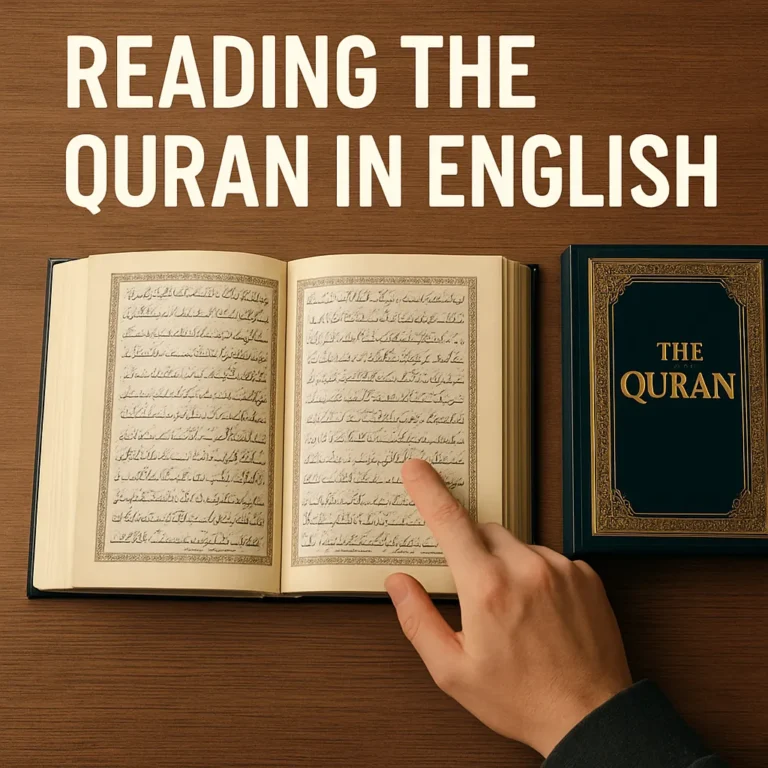
For many readers, engaging with the Qur’an in English offers a doorway to meaning that complements Arabic study or provides access for those who do not read Arabic. This guide focuses on practical, respectful, and productive approaches to reading the Qur’an in English—whether you are a newcomer, a student of Islamic studies, or someone seeking personal reflection. While the Arabic text is considered the primary source, English translations can illuminate themes, stories, and divine guidance for a broad audience. The goal is not to replace familiarity with the original but to cultivate clarity, reverence, and understanding through thoughtful reading.
In this article you will find:
Foundational concepts about translation, interpretation, and context
Practical steps for a structured reading practice
Guidance on choosing translations and using supplementary resources
Strategies for deeper comprehension through notes, reflection, and cross-referencing
Understanding translations and their limits
What is translation, and why does it matter for English readers?
Translation is a bridge between languages. For the Qur’an, English translations aim to convey meaning rather than reproduce the exact Arabic wording. Because Arabic is rich with layers—grammar, rhetoric, morphology, and stylistic devices—no single English rendering can capture every nuance. Different translators prioritize different goals:
Formal equivalence or literal rendering—closer word-for-word accuracy, often with less natural English
Thought-for-thought or dynamic equivalence—emphasis on conveying ideas and themes, sometimes at the expense of exact phrasing
Jargon and accessibility—modern, plain English aimed at readability
When you read English translations, you may encounter variations in terminology, tone, and emphasis. This is not a defect but a feature of linguistic interpretation. The important practice is to approach translations with awareness of their aims and to consider consulting multiple translations or tafsir (exegesis) to broaden comprehension.
Arabic original vs English translation
The Qur’an in Arabic is traditionally recited and studied in its original language. The Arabic text forms the basis of meaning and is considered the source from which translations depart. English readers should be mindful of two related ideas:
Context matters—historical, linguistic, and thematic contexts shape interpretation.
Recitation and meaning—sound, rhythm, and eloquence in Arabic carry beauty and impact beyond literal meaning in any translation.
Therefore, when you read the Qur’an in English, you are engaging with a carefully prepared interpretive rendering designed to help you grasp central messages, moral guidance, and spiritual lessons.
Choosing an English translation or edition
There are numerous English translations of the Qur’an, each with its distinctive voice and strengths. When selecting a translation for reading the Qur’an in English, consider your goals: accuracy, readability, theological perspective, and supplementary notes. Below are some common choices and what they offer.
Popular options and their characteristics
Mohsin Khan and Mohammad Hilali (The Noble Qur’an in the English Language) — traditional, literal style with inline notes; helpful for first exposure to Qur’anic wording.
Abdul Haleem (The Qur’an: A New Translation) — contemporary language, accessible flow, strong emphasis on narration and themes.
Abdul Majid Daryabadi or M.A.S. Abdel Haleem variants — clear language with attentive glosses where needed.
Pickthall (The Meaning of the Glorious Qur’an) — classic, formal English; valued for its poetic tone, especially for literary readers.
Sahih International — balanced, straightforward modern English; widely used in study circles and online resources.
The Clear Quran by Dr. Mustafa Khattab — emphasis on clarity and modern English usage; includes helpful explanatory notes.
Other reliable editions— consider consulting a few translations to compare phrasing and emphasis, especially for challenging verses (for example, verses about justice, mercy, and humanity).
Tip: If you are new to Qur’anic reading in English, you might start with a modern, readable translation (like Abdul Haleem or The Clear Quran) to build familiarity, and then consult a more literal or poetic version (like Pickthall or Yusuf Ali) to sense variations in wording and nuance. Some readers also appreciate bilingual editions that present Arabic alongside English.
Practical reading plan: a structured approach
Developing a steady, productive habit is essential. The following plan provides a practical framework you can adapt to your schedule. It emphasizes regularity, reflection, and cross-reference with supplementary materials.
Foundational habits (week 1)
Set a realistic daily goal—e.g., 2–3 pages or 15–20 minutes of reading.
Choose a translation and keep it consistent for the first week to build familiarity.
Read aloud or subvocalize to notice rhythm, phrasing, and emphasis; this supports memory and comprehension.
Annotate lightly with brief notes on unfamiliar terms, themes, or questions.
Deepening engagement (weeks 2–4)
Introduce tafsir or commentary—read relevant notes that explain context, revelation order, and key terms.
Cross-reference topics—if a passage concerns mercy, justice, or guidance for daily life, compare with other verses on the same topic.
Create a personal reflection journal—write a short reflection or prayer inspired by the passage.
Review and summarize—after reading a section, summarize the main message in your own words.
Reading strategies and techniques
Key approaches to maximize comprehension
Read slowly and carefully—allow phrases to resonate; avoid rushing through the text.
Identify central themes—in every passage, look for guidance, moral exhortation, or historical context.
Pause for reflection—after a verse or passage, ask yourself what the verse is inviting you to understand or apply.
Note linguistic features—look for root words, repeated phrases, and contrasts; these often carry thematic weight.
Compare translations—when a verse feels unclear, consult another translation to see different renderings of key terms.
Note-taking and reflection
A practical note-taking approach can include:
Keywords: list 2–3 important terms from the passage.
Questions: record any questions you have about meaning, context, or applicability.
Applications: note concrete actions or attitudes you might adopt in daily life.
Cross-references: link to related verses or themes in your notes.
Using tafsir and context for deeper understanding
To move beyond surface meaning, many readers consult tafsir (exegesis) and credible scholarly notes. Tafsir offers information about revelation circumstances (asbab al-nuzul), linguistic nuances, and jurisprudential implications that illuminate why a verse was revealed and how it has been interpreted across generations.
Types of contextual resources
Classical tafsir— works by early scholars that explain verses within a historical and theological framework.
Contemporary tafsir— modern commentaries that address current issues and use contemporary language.
Theme-based studies— explorations of topics such as faith, mercy, justice, prophethood, and eschatology across the Qur’an.
Hadith and sira references— where appropriate, learn how prophetic traditions and the life of the Prophet Muhammad (peace be upon him) illuminate interpretive questions.
Important caveat: not every translation or tafsir agrees on every point. When in doubt, seek guidance from knowledgeable instructors, scholars, or community study groups, and consider multiple viewpoints with respect and humility.
Common challenges and practical solutions
Language and nuance
English translations may struggle to capture the exact nuance of Arabic terms like tawhid, rahma, or ibadah. If a term seems unclear, explore its usage across verses, consult a reputable glossary, or read a commentary to see how scholars interpret the term in different contexts.
Pronouns and referents
Some verses use pronouns or abstract references that depend on prior context. When this happens, review surrounding verses, read a translation that includes cross-references, and consult notes to see how commentators resolve the referent.
Context of revelation
Verses revealed in specific historical circumstances may address a particular situation. It can be tempting to universalize too quickly. Use asbab al-nuzul (the historical context) to separate timeless guidance from situations unique to a moment in time.
If you work with multiple translations, you may notice differences in tone or word choice. Use these variations as a learning tool: they show how translators approach the same meaning from different angles. The goal is to develop a balanced understanding rather than to pick a single “correct” rendering.
Reading the Qur’an in English for prayer, study, and reflection
People engage with the Qur’an in English for varied purposes. Some seek spiritual inspiration, others aim to study jurisprudence or ethics, and many pursue personal growth through reflection on divine guidance. Below are practical ideas for different goals.
For daily inspiration and contemplation
Choose short passages (varying lengths) and reflect on how their guidance applies to your day.
Write a daily verse reflection in your journal, focusing on a lesson or action you can take.
Listen to recitation in Arabic and read the English translation in parallel to connect sound with meaning.
For academic or structured study
Maintain a reading log that tracks topics, verses, and related tafsir notes.
Cross-reference themes such as revelation chronology, audience, and rhetorical devices.
Attend or join study circles to discuss interpretations and gain different perspectives.
For children and youth learning
Use bilingual editions with simple English explanations alongside the Arabic text.
Present stories with moral lessons and invite questions to nurture curiosity and respect.
Integrate activities such as drawing, journaling, or role-play to reinforce understanding.
Ethical and spiritual considerations
Approaching the Qur’an in English respectfully requires awareness of several ethical dimensions. The Qur’an is revered by Muslims as a sacred text, and readers should practice:
Humility—recognize the limits of translation and your own context when interpreting verses.
Reverence—handle translations with care; avoid misquoting or misrepresenting verses.
Accuracy and fairness—when discussing verses with others, strive to represent meanings faithfully and acknowledge differing interpretations.
Responsible application—translate insights into constructive, compassionate action in daily life.
Practical tools and resources for reading the Qur’an in English
To support effective practice, consider using a combination of the following tools. They can enhance comprehension, retention, and engagement without requiring mastery of the Arabic language.
Multiple translations—side-by-side readings to compare wording and nuance.
Commentaries and tafsir—reliable scholarly works that explain context, language, and themes.
Glossaries and lexicons—definitions of key Arabic terms commonly encountered in translations.
Study guides and online courses—structured curricula that build vocabulary, context, and critical thinking.
Audio recitation—listening to the Qur’anic Arabic recitation while following English translation to connect sound and sense.
To illustrate how these practices come together, here is concise guidance for a typical session focused on a short passage. Note that this is a generic reading example and not tied to a specific verse.
Prepare your environment — a quiet space, comfortable seating, and a notebook or digital device for notes.
Choose a passage — select a portion around 1–2 pages and read slowly in one translation for consistency.
Annotate — underline or highlight key concepts, unfamiliar terms, and any questions that arise.
Consult notes — read brief tafsir notes or context for the selected passage to illuminate meaning.
Reflect and journal — write a short reflection focusing on personal interpretation and potential application.
Common misperceptions and clarifications
As you engage with the Qur’an in English, you may encounter some common misperceptions. Here are clarifications to support responsible understanding:
Translation is not flawless—no translation perfectly captures every nuance of the original Arabic.
Translations differ in tone—a verse may read differently across translations because translators weigh different aspects of meaning.
Context matters—verses are often embedded within larger narratives or debates; reading in isolation can be misleading.
Forms of guidance—the Qur’an provides guidance that applies to personal conduct, social justice, worship, and spiritual growth; translations should be read with an eye to these broad categories.
Online and community experiences
Engaging with others can enrich your understanding. Consider the following approaches:
Join study circles or local mosque groups that discuss Qur’anic readings in English and share diverse perspectives.
Participate in online forums where scholars and lay readers discuss translations, questions, and interpretations with civility and care.
Attend lectures or webinars that focus on thematic reading, historical context, or linguistic approaches to the Qur’an in English.
Reading the Qur’an in English is a meaningful practice that can accompany study in Arabic, personal reflection, and ethical living. A few closing recommendations to sustain a fruitful journey:
Be patient—deep understanding grows gradually as you become familiar with recurring themes and stories.
Maintain curiosity—tackle questions with humility and seek reliable sources rather than quick answers.
Balance study with reflection—combine intellectual engagement with spiritual practice, such as quiet supplication or gratitude.
Respect diversity—recognize that many readers bring varied denominational backgrounds and interpretive voices; approach differences with respect.
By combining thoughtful reading, careful use of translations, and engagement with authentic commentary, you can deepen both intellectual understanding and spiritual resonance in your encounter with the Qur’an in English. Whether used as a daily practice, a scholarly pursuit, or a personal journey of faith, this guide aims to empower you to read with clarity, intention, and reverence.