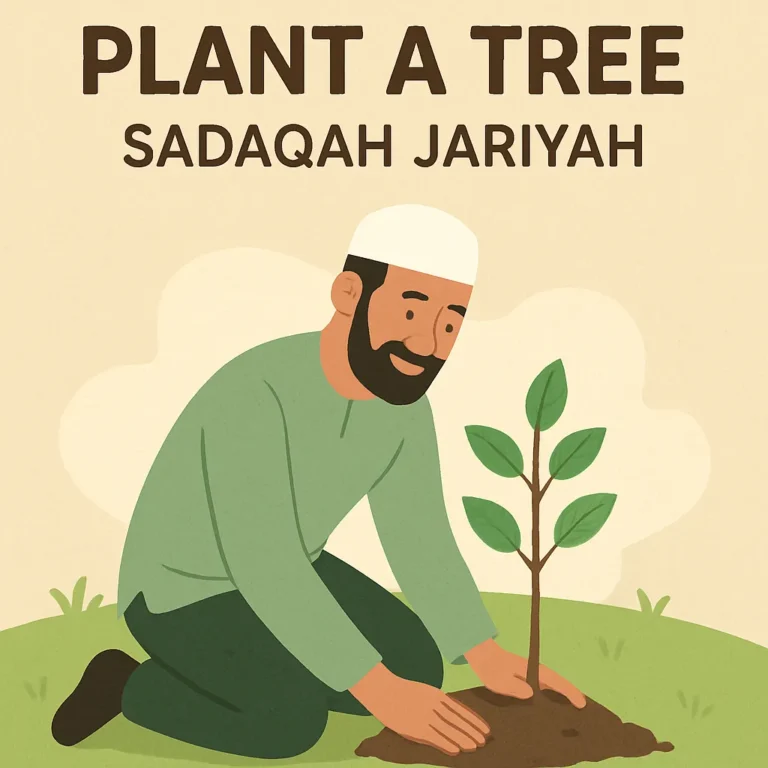
Introduction: The Concept of Sadaqah Jariyah and Planting Trees
In many ethical and spiritual traditions, the idea of giving is not limited to a single act of charity. The concept of Sadaqah Jariyah — often translated as ongoing charity — refers to charitable actions that continue to benefit people long after the donor has given. One of the most powerful expressions of this long-term generosity is planting trees. When a person commits to planting trees as a form of charity, the benefits multiply over years and generations: shade for laborers, fruit for families, carbon capture for the climate, and habitat for countless creatures. This article explores plant a tree sadaqah jariyah as a practical, ethical, and spiritually meaningful pathway to sustainable impact.
Trees live for decades or centuries, and their impact does not depend on a single moment. In many communities, a single planted tree can transform a street, a park, or a farm by providing resources, beauty, and resilience. By framing tree planting as sadaqah jariyah, donors turn a personal act of kindness into a shared asset that reduces need, supports livelihoods, and fosters a more harmonious relationship between people and the ecosystems on which they depend.
Why Trees Make Ideal Ongoing Charity
Planting trees as an act of charity has a distinctive combination of attributes that makes it particularly effective as sadaqah jariyah:
Longevity: Trees persist for many years, creating long-term benefits for communities and the environment.
Multiplicative benefits: A single tree can provide shade, fruit, timber, biodiversity habitat, soil stabilization, and carbon sequestration — all at once.
Low ongoing maintenance relative to the scale of the impact if properly planned and supported.
Scalability: Projects can start small and grow, multiplying the charity through future planting cycles.
Inclusion: Tree planting can involve families, schools, mosques, community groups, and charitable organizations, building solidarity and shared stewardship.
For many traditions, acts of charity with enduring impact align with the belief that good deeds leave a lasting imprint. The idea that every time someone benefits from your tree(s), you gain reward is a powerful reminder that a small, well-placed seed can become a living testament to mercy, generosity, and responsibility toward creation. In this sense, plant a tree sadaqah jariyah is not just an act of giving; it is a covenant with the future, a way to steward the Earth while alleviating human need.
From Concept to Reality: How Planting Trees Becomes Ongoing Charity
The transition from a personal intention to a functioning tree-based sadaqah jariyah project requires thoughtful planning and ongoing care. The following considerations help ensure that a tree-planting initiative yields durable benefits rather than a one-time display of generosity.
Key principles for durable impact
Local relevance: Choose species and planting locations that respond to local climate, soils, water availability, and community needs.
Community ownership: Involve neighbors, schools, mosques, and local groups so that maintenance and governance are shared.
Ecological fit: Favor native or well-adapted species that support biodiversity and avoid invasive introductions.
Accountability: Establish transparent processes for funding, planting, and follow-up care.
Education: Use the project as a platform to teach climate literacy, environmental stewardship, and the ethic of ongoing charity.
When executed with care, a plant a tree sadaqah jariyah project becomes more than a donation; it becomes a living system that sustains people and ecosystems for years to come.
How to Start: A Practical Guide to Planting for Sadaqah Jariyah
If you are inspired to begin a plant a tree sadaqah jariyah initiative, follow these practical steps. They will help you move from intention to action with clarity and accountability.
Step-by-step plan
Define the impact: Decide what you want the project to achieve—shade, fruit for nourishment, timber, soil restoration, or a combination of benefits.
Set a scope: Determine the location, number of trees, and the timeframe for planting and maintenance.
Identify the right species: Choose native or well-adapted species that fit the local environment and community needs.
Secure partnerships: Align with local environmental NGOs, schools, community groups, mosques, or municipal agencies to share ownership and resources.
Develop a budget: Include costs for saplings, soil preparation, irrigation (where needed), fencing, mulching, and long-term maintenance.
Fundraising and transparency: Create a plan for funding—one-time donations, recurring pledges, or endowments—and publish clear reporting.
Plan the planting event: Schedule a day for planting with volunteers, ensure safety, and document the event to inspire further participation.
Establish maintenance schedules: Create a care plan for pruning, watering, pest control, and eventual replacement as trees age.
Measure and report impact: Track outcomes such as tree survival rates, shade area, fruit yield, and environmental benefits; share updates with supporters.
Choosing the right species for long-term benefit
The long-term success of a tree planting project depends on selecting species that thrive in the local climate and soil, require feasible maintenance, and meet community goals. Consider:
Native species that support local wildlife and require less intensive care.
Fruit-bearing trees when community nutrition and livelihoods are priorities.
Shade trees for temperatures, schools, and public spaces, which provide comfort and energy savings.
Drought-tolerant options where water is scarce to ensure high survival rates.
In many regions, a mix of tree types offers the greatest resilience. A thoughtful plan might pair shade-providing trees with fruit-bearing specimens and select biodiversity-supporting species to create a balanced ecosystem.
A durable sadaqah jariyah through arboreal planting depends on active community involvement. The following approaches help weave the project into the social fabric of a neighborhood or institution.
Engaging schools and youth
Organize education-driven planting days where students learn about ecology, water cycles, and the moral significance of ongoing charity.
Create student-led maintenance crews to foster responsibility and leadership.
Offer service hours for community service requirements tied to environmental action.
Partnering with religious centers
Coordinate with mosques or religious centers to frame the planting as a spiritual and communal act.
Use prayer gatherings or reflection sessions to reinforce the timeless value of creation care and charitable perseverance.
Collaborating with local authorities and NGOs
Work within municipal plans for green spaces to ensure legal compliance and lasting stewardship.
Leverage NGO networks for technical guidance, funding channels, and community outreach.
Case Studies and Examples: Real-World Pathways to Sadaqah Jariyah Through Trees
While every project is unique, several common patterns emerge across successful tree planting sadaqah jariyah efforts:
Case Study A: Urban shade and food security corridor
Location: A densely populated urban neighborhood.
Goals: Provide shade on sidewalks and fruit for residents with limited access to fresh produce.
Approach: Partnered with a local mosque, a school, and a city park district to plant a corridor of shade trees and fruit trees along a pedestrian street.
Impact: Reduced heat exposure in summer, improved air quality, and a measurable increase in local fruit availability.
Goals: Create an outdoor classroom that supports science education and a community orchard.
Approach: Students participated in planning, planting, and ongoing care; land was prepared with soil rehabilitation techniques.
Impact: Enhanced learning opportunities, increased tree canopy, and a source of nutrition for school meals.
Case Study C: Community forest reserve
Location: Peri-urban area transitioning from agricultural land.
Goals: Reforest degraded land and restore habitat for pollinators and wildlife.
Approach: A multi-year plan funded by donors who contributed to an endowment; local volunteers managed planting and maintenance.
Impact: Biodiversity rebound, improved watershed health, and a model for sustainable land stewardship.
These case studies illustrate how a plant a tree sadaqah jariyah initiative can be tailored to different contexts while maintaining a core focus on long-term benefits and community empowerment.
Environmental and Social Benefits: A Comprehensive View
Tree planting as a form of ongoing charity yields a broad spectrum of gains:
Environmental resilience: Trees help moderate temperatures, reduce flooding risk, and stabilize soils, creating healthier landscapes now and for future generations.
Air and water quality: Trees filter air pollutants and contribute to cleaner water cycles, benefiting entire communities.
Biodiversity: Native and well-adapted trees provide habitats for birds, insects, and other wildlife, supporting ecological balance.
Food and nutrition: Fruit trees and nut trees can supplement diets and increase household food security.
Economic opportunities: Long-term harvests, fuelwood, or timber can support livelihoods when managed responsibly.
Social cohesion: Shared planting and care create social networks, volunteer opportunities, and a shared sense of stewardship.
From a spiritual perspective, the ongoing dividends of sadaqah jariyah are often described as lasting rewards that continue to accrue, not merely at the moment of giving but across time through the ongoing use and benefit derived from the trees.
A durable Plant a tree sadaqah jariyah program requires careful stewardship. The following considerations help ensure sustainability and accountability.
Water and soil management
Assess water sources for irrigation and establish efficient methods such as drip irrigation where appropriate.
Employ soil rehabilitation practices to improve fertility and tree establishment.
Implement mulching and erosion control to protect root zones and conserve moisture.
Maintenance and monitoring
Create a maintenance calendar that covers pruning, pest management, and disease monitoring.
Set up a reporting mechanism so donors can see progress and outcomes over time.
Plan for tree replacement when mortality occurs, maintaining the overall canopy and ecosystem services.
Legal and ethical considerations
Obtain necessary permissions for planting in public spaces or on private land.
Respect cultural norms and land ownership rights, ensuring informed consent from affected communities.
Avoid introducing invasive species and minimize any ecological disruption.
At the nexus of faith and ecology, a tree-based sadaqah jariyah aligns with timeless ethical principles: stewardship of creation, care for neighbors, and responsibility toward the vulnerable. Ethical planting emphasizes humility, gratitude, and a recognition that land and living beings are entrusted to human hands for responsible governance. By framing environmental action as an expression of ongoing charity, communities can cultivate a shared ethic that respects both spiritual aims and scientific understanding of ecological systems.
Balancing compassion with prudence
Planting trees as ongoing charity should be paired with prudent resource use. This means selecting trees suited to the local climate, ensuring water efficiency, and avoiding projects that could create unsustainable maintenance burdens. The aim is generous action that endures without creating dependency on unsustainable streams of funding.
Transparent reporting helps donors understand the tangible and intangible benefits of their generosity. A robust impact framework might include metrics such as survival rate of planted trees, canopy cover achieved, number of people benefiting from shade or fruit, and ecological indicators like biodiversity markers or soil quality improvements.
Impact indicators you can track
Tree survival and growth data over time
Shade area and microclimate improvements
Fruit yields and distribution to beneficiaries
Carbon sequestration estimates for the planted trees
Community engagement metrics (volunteer hours, school participation, etc.)
Sharing progress through annual reports, social media updates, and community meetings helps keep the project vibrant and accountable. It also reinforces the idea that you are contributing to ongoing charity that continues to bear fruit in many forms.
What does it mean to plant a tree sadaqah jariyah?
It means making a charitable commitment that results in a tree or a group of trees that will provide ongoing benefits to people and the environment for years to come, often in a way that the donor’s reward continues as others experience the trees’ services.
Can I plant trees as part of a mosque or community project?
Yes. Collaborative planting programs are ideal vehicles for charitable action. They leverage collective energy, distribute maintenance responsibility, and amplify the reach of the sadaqah jariyah through shared ownership.
What if the local climate isn’t suitable for fruit trees?
Even in dry or cold environments, tree planting can be a powerful form of sadaqah jariyah. Native trees, drought-tolerant species, and agroforestry approaches can yield meaningful benefits for soil health, shade, wildlife habitat, and carbon capture.
How do I sustain a long-term tree project?
Long-term sustainability relies on structured governance, predictable funding, community participation, and a maintenance plan. An endowment, recurring donations, or a partnership with a local NGO can help ensure continuity beyond the initial planting phase.
Planting trees as a form of sadaqah jariyah merges ecological stewardship with spiritual generosity. It transforms a single moment of giving into a sustained, shared resource that nourishes people, supports ecosystems, and cultivates a sense of collective responsibility for the health of our planet. Whether you are a participant, a sponsor, a student, or a community leader, you have the opportunity to enact a lasting legacy through tree-based charity. By choosing appropriate species, engaging local partners, and committing to long-term care, your decision to plant a tree sadaqah jariyah becomes an enduring testament to mercy, resilience, and hope for future generations.
If you are reading this and feel inspired to begin, start with small steps today: identify a local space, connect with a partner organization, select trees that fit your climate and community needs, and plan a planting event that invites neighbors to participate in the living act of giving. In doing so, you contribute to a forest of generosity — a growing, living network of ongoing charity that benefits all beings and honors the trust we share with the natural world.
In the end, the question is not only how much can I give? but how long can the impact endure? Through planting trees as sadaqah jariyah, we answer with a clear and hopeful yes: the gift of life, shade, fruit, and ecological balance can keep giving, generation after generation.