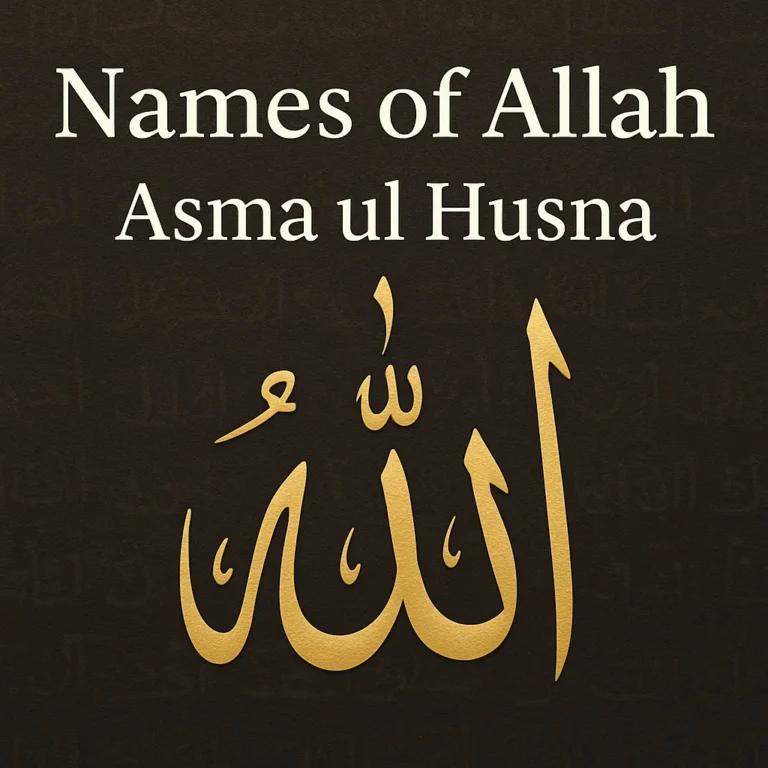
Asma Ul Husna—also known as The 99 Names of Allah—is a sacred catalog of divine attributes in Islamic tradition. Each name represents a facet of Allah’s perfection and transcendent beauty, inviting believers to reflect, remember, and cultivate a deeper relationship with the divine. This article serves as a complete guide to the Asma Ul Husna, presenting the names with their traditional meanings, practical guidance for recitation and meditation, and thoughtful grouping that helps connect the names to everyday life. Throughout, you will encounter variations of translations and transliterations—a reflection of the rich, living use of these names in different languages, cultures, and schools of thought.
The phrase Asma Ul Husna literally means “The Most Beautiful Names”. In Islamic belief, these names capture the infinite attributes of Allah, the One and Only God. Muslims recite, reflect on, and often memorize these names as a way to remember God’s mercy, power, knowledge, and wisdom. The list commonly cited contains 99 distinct names, each paired with a lucid translation such as “The All-Knowing”, “The Creator”, or “The Provider”. While the exact wording can vary slightly between sources, the essential meanings remain harmonized across cultures.
Why study the 99 Names? They guide prayer, ethical conduct, and spiritual aspiration. Knowing a name is a doorway to understanding a divine attribute and contemplating the ways in which God relates to creation. For many, the practice of invoking a particular name at a specific moment—when seeking forgiveness, protection, guidance, or relief—becomes a structured form of supplication and gratitude.
Contextual reflection: Read a few names that match your situation, and reflect on how those attributes manifest in your life and in the world around you.
Dhikr and supplication: Use the names as a core part of dhikr (remembrance). Repetition helps embed gratitude, trust, and humility.
Meaningful journaling: Write about what each name evokes for you, and document insights from your prayers, dreams, or readings.
Group study: In a family, class, or community setting, explore a name weekly—its linguistic roots, scripture context, and personal implications.
Ethical alignment: Let the attributes guide decisions—justice, mercy, generosity, and patient endurance in daily life.
When approaching the Asma Ul Husna, it is common to pair memory with contemplation. Some practitioners prefer to recite a name aloud, then pause to consider a concrete way to embody that attribute in interactions with others. Others might recite with a focus on gratitude, realizing that God’s mercy and divine wisdom sustain all beings. Either approach can be deeply transformative when approached with reverence and consistency.
Thematic grouping of the 99 Names
To facilitate understanding, the 99 Names can be thought of in thematic clusters. The following sections present core groups—each with representative names, translations, and brief commentary. This approach helps connect divine attributes to practical life and spiritual practice.
Al-`Alim — The All-Knowing, whose knowledge encompasses all times and places.
Al-Hakim — The Wise, whose decisions embody ultimate discernment.
Al-Basir — The All-Seeing, aware of every intention and action.
As-Sami — The All-Hearing, attentive to every supplication and thought.
Creation, Alteration, and Form
Al-Khaliq — The Creator, fashioning existence from nothingness.
Al-Bari’ — The Evolver, bringing forth form and variety in creation.
Al-Musawwir — The Fashioner, shaping appearance and essence with precision.
Forgiveness, Endurance, and Patience
Al-Ghafur — The Forgiving, who pardons sins with boundless mercy.
Ash-Shakur — The Rewarder of Thankfulness, acknowledging and multiplying gratitude.
Al-Halim — The Forbearing, exercising restraint even when deserved action might be expected.
As-Sabur — The Patient, whose timing is perfect and whose plans endure beyond human endurance.
Protection, Duty, and Accountability
Al-Hafiz — The Protector, safeguarding life and truth.
Al-Wakil — The Trustee, who entrusts and executes matters with care.
Al-Hasib — The Reckoner, who accounts for every action and intention.
Life, Sustenance, and Experience
Al-Muhyi — The Giver of Life, bestowing vitality and renewal.
Al-Mumit — The Taker of Life, whose wisdom governs life’s cycles.
Ar-Razzaq — The Provider, ensuring nourishment and sustenance for all beings.
The Complete List of the 99 Names (selected presentation)
Below is a commonly cited enumeration of the 99 Names, with each name shown in its original Arabic transliteration (as commonly printed in devotional literature), followed by a concise English translation. The translations are rendered in a way that emphasizes the attribute rather than a crude paraphrase. Some readers also encounter slight variations in spelling or order; the essence remains the same.
Ar-Rahman — The Most Merciful
Ar-Rahim — The Merciful
Al-Malik — The King
Al-Quddus — The Holy
As-Salam — The Source of Peace
Al-Mu’min — The Giver of Sicherheit (Trust/ Security)
Al-Muhaymin — The Watcher
Al-Aziz — The Mighty
Al-Jabbar — The Compeller
Al-Mutakabbir — The Proud
Al-Khaliq — The Creator
Al-Bari’ — The Evolver
Al-Musawwir — The Fashioner
Al-Ghaffar — The Forgiving
Al-Qahhar — The Subduer
Ar-Razzaq — The Provider
Al-Fattah — The Opener
Al-`Alim — The All-Knowing
Al-Qabid — The Withholder
Al-Basit — The Reliever
Al-Khafid — The Abaser
Ar-Rafi’ — The Exalter
Al-Mu’izz — The Bestower of Honor
Al-Mudhill — The Humiliator
As-Sami — The All-Hearing
Al-Basir — The All-Seeing
Al-Hakam — The Judge
Al-Adl — The Just
Al-Latif — The Subtle
Al-Khabir — The All-Aware
Al-Halim — The Forbearing
Al-Azim — The Great / Magnificent
Al-Ghafur — The Forgiving
Ash-Shakur — The Rewarder of Thankfulness
Al-Ali — The Most High
Al-Kabir — The Great
Al-Hafiz — The Protector
Al-Muqit — The Nourisher
Al-Hasib — The Reckoner
Al-Jalil — The Majestic
Al-Karim — The Generous
Ar-Raqib — The Watchful
Al-Mujib — The Responser
Al-Wasi’ — The All-Encompassing
Al-Hakim — The Wise
Al-Wadud — The Loving
Al-Majid — The Glorious
Al-Ba’ith — The Resurrector
Ash-Shahid — The Witness
Al-Haqq — The Truth
Al-Wakil — The Trustee
Al-Qawiyy — The Strong
Al-Mateen — The Firm
Al-Wali — The Protecting Friend
Al-Hamid — The Praised
Al-Muhsi — The Accounter
Al-Mubdi’ — The Producer
Al-Mu’id — The Restorer
Al-Muhyi — The Giver of Life
Al-Mumit — The Taker of Life
Al-Hayy — The Ever-Living
Al-Qayyum — The Sustainer
Al-Wajid — The Finder
Al-Majid — The Glorious
Al-Wahid — The One
Al-Ahad — The One and Only
As-Samad — The Absolute / The Self-Sufficient
Al-Qadir — The All-Powerful
Al-Muqtadir — The Creator of Power
Al-Muqaddim — The Expediter
Al-Mu’akhkhir — The Delayer
Al-Awwal — The First
Al-Akhir — The Last
Az-Zahir — The Manifest
Al-Batin — The Hidden
Al-Wali — The Protecting Friend
Al-Muta’ali — The Most Exalted
Al-Barr — The Benevolent
At-Tawwab — The Accepter of Repentance
Al-Muntaqim — The Avenger
Al-Afuww — The Forgiving
Ar-Ra’uf — The Compassionate
Malik al-Mulk — The King of Sovereignty
Dhu-l-Jalali wa-l-Ikram — The Lord of Majesty and Bounty
Al-Muqsit — The Equitable
Al-Jami’ — The Assembler
Al-Ghani — The Rich / The Independent
Al-Mughni — The Enricher
Al-Mani’ — The Preventer
Ad-Darr — The Harmer
An-Nafi’ — The Benefactor
An-Nur — The Light
Al-Hadi — The Guide
Al-Badi’ — The Originator
Al-Baqi — The Immortal
Al-Warith — The Heir
Ar-Rashid — The Rightly Guided
As-Sabur — The Patient
Variations and translations: approaching the Names in different languages
In practice, translations of the Asma Ul Husna vary across languages and cultures. Some translators emphasize literal meanings, while others offer paraphrased renderings to convey the spiritual resonance. You may encounter:
The variations can also reflect pronunciation differences—such as “Ar-Rahman” vs “Ar-Rahman” (the same spelling in Latin script) or newer transliterations like “Ar-Rahmān” with diacritical marks. Regardless of spelling, the core divine attributes remain the same, and the practice of invoking them fosters a sense of closeness to God.
Scholarly and devotional perspectives
The Asma Ul Husna have been revered for centuries in Islamic theology, poetry, and spiritual practice. Classical scholars point to two essential functions:
Theological reflection: Each attribute reveals a facet of God’s perfection and provides a framework for proper attitude toward God and creation.
Ethical cultivation: By contemplating these attributes, believers aspire to embody virtues in daily life—mercy, justice, patience, generosity, and humility.
Contemporary educators and interfaith writers often present the Names as a bridge to interreligious understanding. The universal themes—care for the vulnerable, reverence for life, and the pursuit of justice—offer common ground for dialogue while still honoring the distinctive theological context of Islam.
Here are some concrete ideas for turning the names into lived practice:
Recitation ritual: Pick a handful of names each day, recite them aloud with attention to meaning, and close with a simple dua that reflects the attribute you focused on.
Daily intention: Begin the day by naming a divine attribute you want to embody (for example, honesty and justice from Al-Adl), then seek opportunities to act accordingly.
Compassionate outreach: When interacting with others, remember Ar-Rahman and Ar-Rahim—strive for gentleness and mercy in speech and deed.
Gratitude practice: Use Ash-Shakur to acknowledge the blessings you receive and record them in a gratitude notebook.
The aim is not to reduce divine attributes to a checklist but to cultivate a living sense of God’s presence in every moment and to reflect those attributes outwardly in acts of service, justice, and mercy.
Are the 99 Names the same in every tradition? Most mainstream Sunni and Shia traditions share the same core list, though there are minor variations in order or inclusion of a few names depending on sources. The essence—divine perfection in countless facets—remains constant.
Is it permissible to call God by names outside the list? Yes, but the 99 Names are especially revered because they summarize key attributes of God recognized in the Quran and Hadith. People often use additional descriptive phrases and personal supplications to deepen their relationship with God.
What is the recommended number of names to recite? Practices vary. Some scholars encourage contemplation of all 99 names, while others suggest focusing on a small set daily, gradually expanding over time. The most important component is sincerity and intention.
The Asma Ul Husna offer a guide to the infinite attributes of Allah—mercy, power, wisdom, compassion, and justice among them. Far from being a dry catalog, these names invite believers into a living conversation with the divine. By studying the variations of translations, practicing with intention, and sharing insights within community, the 99 Names become a path toward deeper faith, ethical living, and spiritual serenity.
May this complete guide serve as a practical companion—encouraging you to explore, memorize, and embody the glorious attributes of Allah, the One God, whose names are the lights of creation.