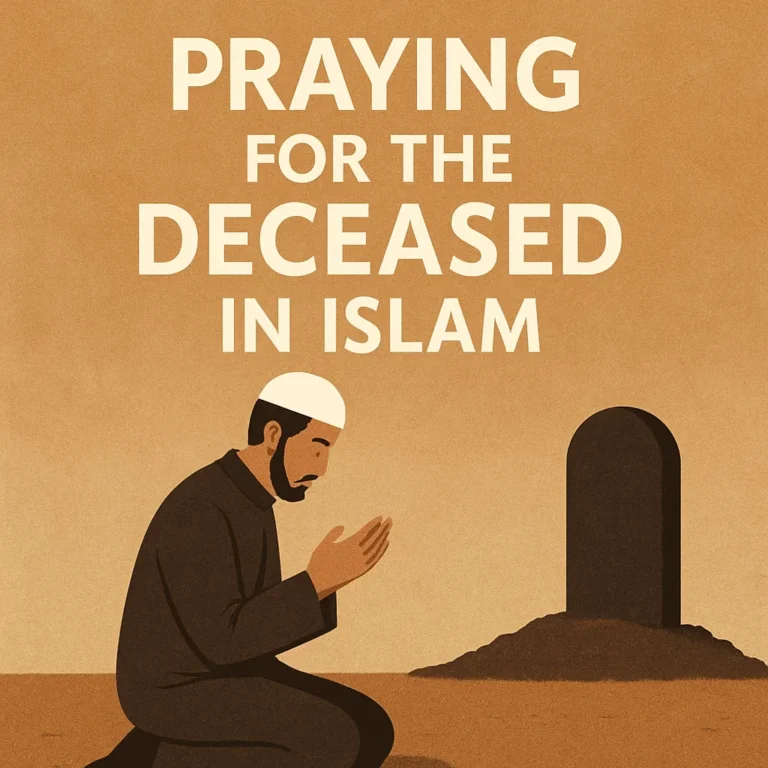
Introduction: Why Praying for the Deceased Matters in Islam
In Islamic tradition, the relationship between the living and the departed remains meaningful long after a person has passed away. The heart of this relationship is dua (supplication) and a spectrum of acts that can benefit the deceased through Allah’s mercy and reward. This comprehensive guide explores the many facets of praying for the deceased, including diverse duas, etiquette, and the various blessings that can be sought for someone who has left this world.
The practice is not merely ceremonial; it is a manifestation of love, responsibility, and continuity of faith. Through du’a for the dead, families and communities express hope for forgiveness, mercy, guidance, and placement in the highest levels of paradise. The guide that follows provides a thorough look at the types of prayers, how to perform them, and practical considerations for people at different life stages—whether at a funeral, at home, in the mosque, or during daily routines.
Foundations: Theological Context and Core Principles
A solid understanding of why we pray for the deceased rests on the Qur’an, the Prophetic traditions (hadith), and the consensus of scholars across the Islamic schools of thought. The core principles include:
Belief in the continuity of reward: The living can supplicate, give charity, and dedicate recitations of the Qur’an on behalf of the dead, and Allah may transfer the reward to the deceased.
Intercession and mercy: While intercession is ultimately by Allah, the practice of asking for mercy for the deceased aligns with the Prophet’s teachings about kindness toward those who have passed away.
Varieties of good deeds: Dua, charity (sadaqah), ongoing charity (sadaqah jariyah), and acts of worship performed on behalf of the dead are all legitimate and widely encouraged.
Etiquette and sincerity: The manner in which prayers are offered—humility, concentration, and sincerity—matters as much as the words themselves.
Dua for the Deceased: Types and Variations
Dua for Forgiveness: Istighfar On Their Behalf
One of the most common and universally encouraged forms of supplication is asking Allah to forgive the deceased. This is often rendered in everyday practice as a request for pardon, mercy, and relief from accountability. Variations you may encounter include concise phrasing as well as longer, multi-clause supplications. Examples (in transliteration and paraphrase) include:
“Allahumma ighfir li hayyina wa mayyitina wa shahidina wa ghayibina wa sagheerina wa kabheerina wa dhakarina wa unthana.” — A comprehensive request for forgiveness for living and dead, male and female, young and old, present and absent, reflecting a broad invocation often used in gatherings and at funerals.
“Allahumma ighfir lahu wa arhamhu wa afihi wa afu ‘anhu.” — A concise wish for forgiveness, mercy, pardon, and relief for the deceased.
“Allahumma ighfirli fulana wa li ahli fulana” (O Allah, forgive me [for] so-and-so and forgive their family) — A variation appropriate when praying for a named individual and their kin.
Note: The exact Arabic wording is less important than the sincerity and intention of your dua. If you are uncertain about wording, it is acceptable to speak in your own words while preserving the core intention: asking for forgiveness, mercy, and relief for the deceased. Some communities prefer traditional formulations, while others favor personal supplications that reflect the relationship to the deceased.
Du’as for Mercy, Peace, and Elevation in the Hereafter
Beyond forgiveness, supplications often seek divine mercy, comfort, and elevation for the deceased in the afterlife. These prays reflect a hope that the departed will be granted serenity, protection from punishment, and sustained rewards. Representative expressions include:
“Allahumma arhamhu, wa’krimuhu, wa’afiuhu, wa-ighfiru lah.” — A request for mercy, generosity in reward, protection from trials, and forgiveness for the departed.
“Allahumma a’ith-hu fi qabrihi bi noorin min nurik wa bi rahmatika.” — A supplication for light and mercy to accompany the deceased in the grave; commonly uttered in personal prayers and funeral contexts.
“Allahumma ja’al fakhrahu fi al-jannah wa adhkharhu bil ‘afiyah.” — A request that the deceased’s rank be among the inhabitants of paradise and to grant him safety and ease.
Variations are plentiful. The underlying idea is consistent: to entrust the deceased to Allah’s mercy and to seek a favorable outcome in the next life.
Reciting the Qur’an on Their Behalf
An action of considerable emphasis across Muslim communities is the recitation of the Qur’an for the deceased. This is often done by family members or communities in gatherings or during personal worship. The reward of recitation is believed to be conveyed to the dead, making it a practical and spiritually rich form of support. Common practices include:
Reading Surah al-Fatiha in prayer or after prayers with the intention of the dead.
Reading portions of the Qur’an (e.g., a few verses, a page, or a chapter) and dedicating the reward to the deceased.
Completing a portion of the Qur’an as a group and designating the reward to the departed.
While the exact theological nuance can vary among scholars, the majority view supports that Qur’an recitation may benefit the deceased when done with the rightful intention and in a manner consistent with local traditions.
Charity and Sadaqah on Their Behalf: Sadaqah Jariyah and More
Sadaqah (voluntary charity) given by the living for the deceased is widely encouraged. The concept of sadaqah jariyah—an ongoing charity that continues to benefit others over time—extends to the deceased when the intention is to benefit them. Common modalities include:
Giving money or resources for the welfare of others in the name of the departed.
Building or supporting mosques, schools, wells, or charitable institutions named after the deceased or dedicated to their memory.
Donating books, Qur’anic materials, or educational resources that will be used by generations to come.
The practical impact of sadaqah on the deceased is a powerful reminder that acts of kindness persist beyond a person’s lifetime. Recipients of these acts of charity may include the poor, orphans, students, and those in need within the community.
Performing Hajj or Umrah on Their Behalf
In Islam, it is permissible to perform Hajj or Umrah on behalf of a deceased person if one has not yet fulfilled their own obligation. While a living person cannot do so on behalf of another’s past obligations if they themselves owe something to be performed, many scholars permit performing these acts for someone who has died, provided the intention is to fulfill a duty that the deceased could not complete. In practice, people undertake:
Traveling to Hajj or Umrah with the intention that the reward is for the deceased.
Prayers, supplications, and supplicatory rituals performed in the holy places as a way to honor the departed.
This form of devotional action is not a universal obligation but is viewed as a sanctioned, beneficial practice in many communities, subject to individual circumstances and scholarly guidance.
Other Common Supplications and Wording Variations
People also use a variety of phrases to express care for the deceased, including personal du’a in everyday speech. Examples include:
“May Allah forgive you, grant you mercy, and grant you peace.”
“May Allah grant you the highest places in Paradise and keep you safe from the trials of the grave.”
“May your graves be illuminated with light, and may your family be comforted.”
The diversity of expressions reflects cultural influences, dialects, and the intimate nature of relationships. The essential aim is that the supplication is sincere, focused, and contingent upon faith in Allah’s mercy.
Etiquette of Making Dua for the Deceased
Good etiquette (adab) is essential when praying for the deceased. It elevates the act beyond a routine recitation and helps participants cultivate sincerity, humility, and mindfulness. Key guidelines include:
Intention (niyyah): Begin with a clear intention to seek Allah’s mercy for the deceased and to grant spiritual benefit to them.
Aqeedah alignment: Ensure the supplications align with Tawhid (the oneness of God) and the prophetic tradition without attributing powers to the supplication itself.
Purity (wudu) and cleanliness: Perform wudu if you are participating in formal prayers or recitations in a mosque or a dedicated prayer space.
Facing the Qibla and proper concentration: While not compulsory in every context, facing the Qibla and maintaining humility helps the supplicant focus on the act of worship.
Sincerity and humility: Speak softly, avoid showy rhetoric, and avoid making the dua as a performance for others to observe.
Respect for the audience and atmosphere: In a family gathering or funeral setting, be sensitive to others’ emotions; avoid long pauses that may disrupt collective prayers.
Consistency with local customs and scholarly guidance: Different communities have cherished practices; always respect local traditions and seek guidance from reputable scholars if in doubt.
Funerals: Dua is a central feature. Offer a concise supplication that seeks forgiveness and mercy for the deceased on behalf of all present.
Visiting graves: It is common to recite short prayers and verses from the Qur’an, and to make supplication for mercy. Maintain a quiet, reflective demeanor.
Home gatherings: A shared recitation of a portion of the Qur’an or a collective dua can be offered in a calm and respectful tone.
Ramadan and special occasions: Seasonal supplications may carry additional emotional weight, but the same etiquette applies: humility, sincerity, and a focus on the redemption of the deceased’s soul.
Practical Guidance: Scenarios and Step-by-Step Approaches
Scenario 1: At a Funeral or Memorial Service
In many communities, the funeral is the natural place for a structured, concise dua. A practical approach might be:
Begin with a brief intention to supplicate for the deceased.
Offer Surah Al-Fatiha or a short recitation of Qur’an for the dead, if appropriate.
Recite a few concise supplications for forgiveness, mercy, and entry into Paradise upon the deceased.
Conclude with collective prayers or a quiet moment of remembrance, as is customary in your community.
Scenario 2: After a Community Prayer or in a Mosque
Sprinkling the practice of dua throughout the day can be meaningful. A practical plan could be:
Before leaving the prayer area, offer a short dua for mercy and forgiveness for the deceased.
Read a few verses of the Qur’an as a group or individually, dedicating the reward to the departed.
Encourage others to share a brief dua, ensuring a respectful and tranquil environment.
Home prayer allows for intimate, heartfelt supplication. A simple, effective approach might include:
Make wudu if possible and face the Qibla.
Offer a personal dua in your own words, with explicit intentions for forgiveness and mercy.
Follow with Qur’anic recitation or a short reading from the Book of Allah.
End with a short supplication for your own family and for the larger community, tying personal grief to a broader sense of responsibility.
Blessings for the Living: How Praying for the Deceased Impacts You
The act of praying for the departed is not a one-way gesture; it also offers profound spiritual and emotional benefits for the living. Some of these blessings include:
Strengthened faith: Regular engagement with dua reinforces trust in Allah’s mercy and sovereignty.
Reward and mercy: The supplicant seeks reward for themselves through acts of worship and righteousness, which is a source of spiritual comfort during grief.
Family unity: Shared prayers can bring families together across generations, strengthening bonds and collective remembrance of faith principles.
Continuity of good deeds: Through sadaqah, Qur’an recitation, and acts of charity in the name of the deceased, the positive impact of their life continues to resonate in the community.
As families seek to engage in prayers for the deceased, several questions commonly arise. Here are concise clarifications to common concerns:
Can the dead hear our prayers? There is scholarly diversity on this point. Some traditions hold that the living’s du’a reaches the deceased through Allah’s bounty, while others emphasize it as a spiritual benefit regardless of direct auditory reception. In practice, many communities continue to pray for the deceased and attribute spiritual benefit to them.
Is it allowed to recite Qur’an for the dead? Yes. Reciting Qur’an and dedicating the reward to the deceased is a well-established, widely practiced act in many Muslim communities.
Are there any sins to avoid when praying for the dead? Focus on sincerity, avoiding arrogance, and ensuring the intention is for the deceased’s benefit rather than for self-display or social approval.
Should the deceased be present for the prayers? The deceased’s presence is not a prerequisite; the prayers are for their benefit, and the act remains valid regardless of whether any literal hearing occurs.
If you want to cultivate a consistent, meaningful habit of praying for the deceased, consider the following framework. It is designed to be adaptable across different contexts and cultural settings.
Set a clear intention before you begin any dua or Qur’an recitation.
Learn a few reliable phrases for forgiveness, mercy, and mercy for the deceased, so you can vary your wording while keeping core meanings.
Incorporate Qur’an recitation as part of your routine, dedicating a portion of your practice to the dead.
Involve your family: Teach children and younger relatives how to participate in short supplications respectfully.
Make charity a companion practice by giving sadaqah on behalf of the deceased in seasons of blessing (Ramadan, Eid, or during personal milestones).
Respect local norms while keeping to the core principles of sincerity and humility.
Glossary: Key Terms and Phrases
To aid understanding, here are some essential terms used throughout this guide:
Dua — supplication or prayer made to Allah, asking for goodness for oneself, others, or the deceased.
Istighfar — seeking forgiveness, typically for sins; in the context of the deceased, it often denotes asking Allah to forgive them.
Sadaqah — voluntary charity given for the benefit of others, including the deceased.
Sadaqah Jariyah — ongoing charity that continues to yield rewards for the donor and, by intention, the recipient after death.
Qur’an recitation on behalf of the dead — performing readings with the aim that the reward be allocated to the deceased.
Hajj/Umrah on behalf of the deceased — performing the pilgrimage with the intention that the reward is for the departed when legally permissible.
Conclusion: Embracing a Lifelong Practice of Compassion
The practice of praying for the deceased in Islam encompasses a spectrum of acts that reflect compassion, communal responsibility, and faith in Allah’s mercy. From the du’as for forgiveness and mercy to the recitation of the Qur’an, from sadaqah jariyah to potentially performing Hajj/Umrah on their behalf, believers have multiple avenues to express love and maintain a living connection with those who have passed away.
This guide has highlighted variations of praying for the deceased to provide semantic breadth and practical guidance. Regardless of the exact wording or form you choose, the essential principle remains: to seek Allah’s mercy for the departed, to honor their memory with ongoing good deeds, and to cultivate a spirit of humility, generosity, and steadfast faith in the lives of those who remain.
Appendix: Sample Duas (In Arabic Transliteration) for Reference
Note: The following phrases are commonly used and are meant to illustrate the variety of expressions found across communities. They are provided for educational purposes and should be used with sincere intention. If you are unsure about the exact wording, consult a trusted scholar or community elder for guidance.
“Allahumma ighfir li hayyina wa mayyitina wa shahidina wa ghayibina wa sagheerina wa kabheerina wa dhakarina wa unthana.” — A broad supplication for forgiveness across living, dead, male, female, young, old, known and unknown.
“Allahumma ighfir lahu wa arhamhu wa adkhilhu al-jannah.” — O Allah, forgive him, have mercy on him, and admit him to Paradise.
“Allahumma innaka ‘afuwwun tuhibbul ‘afwa fa’fu ‘anni.” — O Allah, You are pardoning and love forgiveness, so forgive me; this form is commonly used in supplications for mercy and absolution, extended to the deceased by intention.
“Allahumma ighfir-li fulana wa li ahli fulana wa arhamhumma.” — O Allah, forgive me for so-and-so and their family; have mercy upon them.
“Rabbana ighfir lana wa li ikhwanina alladhina sabiqoona bil-imani.” — Our Lord, forgive us and our brothers who preceded us in faith; a general supplication that may be adapted for the deceased in memory ceremonies.