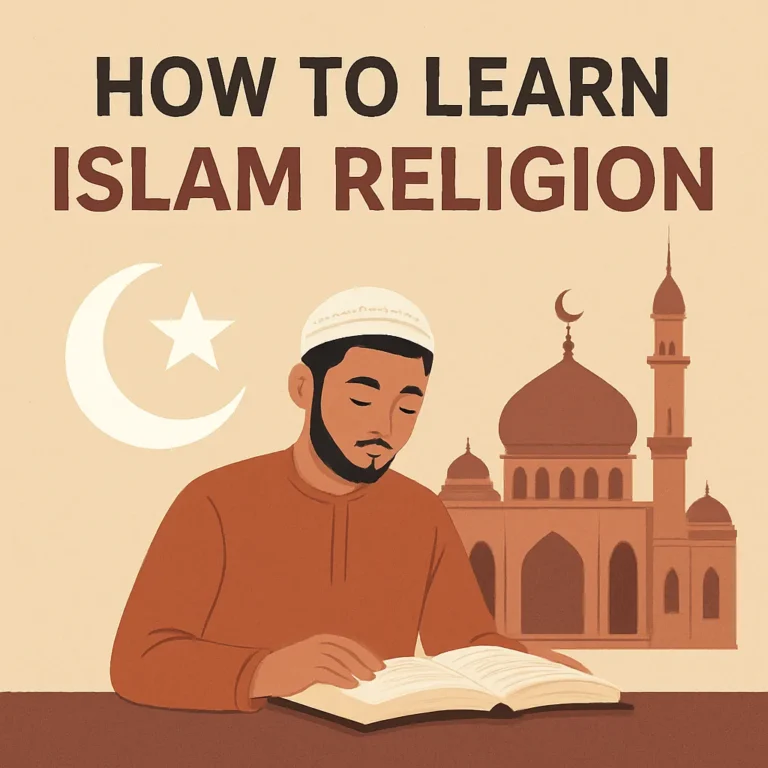
Learning Islamic faith and Islamic practice is a journey that blends
knowledge, reflection, and personal conduct. This guide offers a practical framework for beginners who want to learn about Islam in a structured, responsible, and meaningful way. You will find a variety of approaches —
from foundational study of creed and practice to hands-on participation in a learning community — designed to suit
different learning styles and life circumstances. The aim is not only to memorize facts, but to cultivate
understanding, humility, and beneficial habits that support lifelong growth in faith and character.
Why Learn Islam: Benefits, Responsibilities, and Purpose
For many people, learning Islam is a path toward personal clarity and spiritual grounding.
It can offer:
Clarity about beliefs such as the oneness of God and the role of prophets.
Practical guidance for daily life, ethics, family, and community involvement.
Historical and cultural understanding of diverse Muslim communities worldwide.
Critical thinking about sources, traditions, and contemporary questions.
Community connections that provide support, mentorship, and accountability.
While exploring, it’s important to approach learning with intention and responsibility. This means prioritizing
reputable sources, engaging with trustworthy teachers, and keeping your intentions focused on knowledge that benefits
you and others. In addition, aim to develop a balanced perspective that honors both the core tenets of faith and the
diverse ways Muslims practice their faith around the world.
Getting Started: Core Beliefs and Practices
A solid starting point is to become familiar with the basic articles of faith and the Five Pillars of Islam. This foundation helps you understand what many Muslims refer to when they say
they are practicing their religion.
Foundational Beliefs and Concepts
Tawhid — the oneness and uniqueness of God.
Prophethood — belief that God sent revelations through chosen messengers.
Revealed Books — the Qur’an as final revelation, along with previous scriptures in historical context.
Angels — beings created by God who carry out divine commands.
Day of Judgment — accountability and the afterlife for human actions.
Divine Decree (Qadar) — a balanced view of divine knowledge and human responsibility.
The Five Pillars: Practices and Meaning
Shahada — declaration of faith: “There is no god but God, and Muhammad is the messenger of God.”
Salah — the daily prayer ritual, performed at prescribed times.
Zakat — charitable giving to purify wealth and assist the needy.
Sawm — fasting during the month of Ramadan and in some cases beyond it.
Hajj — the pilgrimage to Mecca, required once in a lifetime for those who are able.
As you begin, consider a graded approach to how you learn:
Start with the essentials (beliefs and practices) to build a solid framework.
Expand to jurisprudence and spirituality in a way that is accessible and relevant.
Incorporate reflection on ethics, character, and daily life.
Practical Study Methods: Reading, Listening, and Practice
There are many ways to learn about Islam, and the most effective approach often combines several methods. Below are
practical methods you can use to create a balanced, sustainable study routine.
Reading Plan: Core Texts and Accessible Guides
Quran with a reliable translation and commentary. Start with a clear translation and short explanations to grasp meanings, then deepen with tafsir (exegesis). Consider translations known for accuracy and readability, such as Saheeh International or Pickthall as starting points, followed by commentary from recognized scholars.
Introductory books that explain beliefs, practice, and spiritual dimensions in plain language. Look for titles written for beginners and reviewed by scholars.
Hadith collections tailored for beginners that explain the Prophet Muhammad’s sayings and actions in context, with attention to authentic sources and graded grades of rigor.
Biographies of the Prophet (Seerah) to understand the historical context, ethics, and exemplary conduct.
Listening and Observation: Lectures, Podcasts, and Community Speakers
Join lectures or webinars offered by established Islamic centers, universities, or reputable organizations.
Listen to scholarly talks and podcasts that explain complex topics in accessible language.
Observe in-person classes or study circles (halaqas) to see how learning is done in a community context.
Note-Taking and Reflection: From Information to Understanding
Keep a learning journal where you summarize what you learned, record questions, and note practical applications.
Practice critical thinking by comparing sources, identifying the main arguments, and noting differences in interpretation.
Regularly discuss what you learn with a trusted teacher or study partner to test your understanding and receive feedback.
Structured Learning Pathways: Online Courses, Community-Based Learning, and Self-Study
Different learners have different pathways. The key is to choose a path that fits your goals, schedule, and
preferred pace, while ensuring the quality and reliability of the material.
Online Courses and Digital Learning
Enroll in beginner-friendly online courses that cover beliefs, rituals, and ethics with clear learning outcomes.
Use modular curricula that allow you to progress step by step and revisit topics as needed.
Take advantage of interactive forums where you can ask questions and receive feedback from instructors.
Community-Based Learning and Local Institutions
Attend local classes at masjids, Islamic centers, or universities to learn within a community setting.
Seek out a teacher or mentor who can provide guidance, answer questions, and model healthy learning habits.
Participate in study circles or family study time to reinforce learning through discussion with others.
Self-Study with Books and Digital Resources
Develop a personal library plan with foundational titles and gradually add more advanced works.
Take a methodical approach by mapping topics (creed, worship, ethics, law) and scheduling dedicated study days.
Use reliable online resources and ensure each resource aligns with recognized scholarly perspectives.
Daily Practice and Implementation: Turning Knowledge into Habit
The ultimate goal of learning about Islam is not only to understand it but to live it in a manner that reflects
sincerity and consideration for others. The following practices help translate study into daily action.
Consistency over intensity: a small, steady daily routine beats infrequent marathon sessions.
Prayer and reflection as anchors for learning, with moments of contemplation about meanings and applications.
Ethical conduct in studying: honesty, patience, humility, and respect for differing views.
Engagement with community through service, dialogue, and mutual support.
Key Texts and Sources: How to Choose Reliable Material
The quality of what you read and study greatly shapes your understanding. The following are general categories and
guidelines to keep in mind when assembling your study resources.
A practical grasp of basic terms helps you engage with sources more confidently. Here are some essential terms, with
emphasis on their meaning and usage.
Shahada — declaration of faith; entry point into Islam for new believers.
Salah — ritual prayer practiced five times daily.
Iman — belief in the articles of faith; often used to describe interior faith as opposed to outward practice.
Islam — submission to God; a comprehensive way of life encompassing belief, worship, and conduct.
Fiqh — Islamic jurisprudence, the human understanding and application of Sharia in daily life.
Tafsir — Qur’anic exegesis or commentary interpreting verses in context.
Ethics, Etiquette, and Community: How to Learn Respectfully
The process of learning about Islam is as much about character and manners as about knowledge.
Here are principles to guide your study:
Humility and willingness to revise your understanding in light of better evidence.
Respect for different opinions within legitimate scholarly traditions.
Accountability in citing sources and acknowledging uncertainty when appropriate.
Compassion in discussions, aiming to build bridges rather than to win debates.
Common Questions and Misconceptions: A Beginner’s Handbook
As you learn, you may encounter questions and misunderstandings. Addressing these with care helps prevent
confusion and misinterpretation.
Is Islam only about rituals? No — Islam emphasizes beliefs, worship, ethics, social justice, and personal conduct.
Do Muslims worship the Prophet? No. Muslims worship God alone; the Prophet is honored as a messenger.
Can non-Arabic speakers learn Islam? Yes — many Muslims learn and practice through translations and explanations while gradually incorporating Arabic terms for deeper understanding.
How to navigate differences among scholars? Learn the basics first, then explore how different scholars interpret similar texts with respect for evidence and context.
Tools and Resources for Beginners: Practical Aids
The right tools can support efficient and enjoyable learning. Consider a mix of physical and digital resources, while
staying mindful of the credibility of each.
Study journals or notebooks to track questions, insights, and progress.
Annotated Qur’an with word-by-word meanings and brief explanations can help with comprehension.
Glossaries of Islamic terms to build vocabulary and confidence in reading texts.
Curated reading lists for beginners, including introductory texts on creed, worship, ethics, and history.
Community feedback from teachers or peers who can offer corrections and encouragement.
Building a Personal Learning Plan: Steps, Schedule, and Goals
A deliberate plan helps you progress steadily. Here is a practical framework you can adapt to your circumstances.
Define goals: What do you want to know in three months? Six months? A year?
Choose a path: Online courses, local classes, self-study, or a combination.
Set a realistic schedule: Commit to daily or weekly sessions that fit your routine.
Pick core topics: Start with faith, prayer, and the pillars, then add etiquette, history, and ethics.
Monitor progress: Use a journal to reflect on what you learned and what remains unclear.
Adjust as needed: If a resource isn’t effective, switch to a more suitable one without losing momentum.
Staying Motivated and Avoiding Pitfalls: Practical Tips
Motivation often comes from seeing tangible benefits and maintaining supportive practices. Beware of common traps that can derail
your learning.
Overloading — avoid trying to cover too much at once; pace is essential.
Relying on a single source— diversify to prevent biased or incomplete understandings.
Conflict with community norms — seek respectful dialogue when you encounter unfamiliar beliefs or practices.
Neglecting practice — knowledge without application does not yield the benefits you seek.
Community and Mentorship: The Role of Guides and Friends
Islam emphasizes community and mutual learning. Engaging with others can enrich your journey and offer practical
support.
Seek mentors who have a solid grounding in Islamic knowledge, who model ethical learning, and who can provide tailored guidance.
Join study circles or small groups to discuss readings, ask questions, and hear diverse viewpoints.
Volunteer or participate in a local mosque or community center to practice what you learn and to give back.
Variations in How to Learn Islam: Different Paths for Different People
There is no single way to learn Islam that suits everyone. Here are several commonly successful approaches, each
framed for different personalities, schedules, and goals.
Structured learner: follows a formal curriculum with a clear progression, milestones, and assessments.
Reflective student: focuses on contemplation, journaling, and personal application of principles.
Community-oriented learner: learns through group discussions, shared experiences, and service projects.
Digital native: uses apps, online courses, podcasts, and multimedia resources to learn on the go.
Applying What You Learn: From Knowledge to Deeds
The ultimate purpose of learning about Islam is to improve personal character, strengthen worship, and foster
compassionate engagement with others. Here are some practical applications you can work toward.
Improve worship by understanding the meaning of the ritual acts and striving for sincerity in intention.
Ethical living through honesty, fairness, patience, and generosity as taught in Islamic sources.
Interfaith dialogue with empathy and accuracy, representing your learning respectfully.
Service to others, especially the needy and vulnerable, in line with the zakat and general ethical guidance.
Tips for Beginners: Quick-Start Advice
If you are just starting out, consider the following practical tips to accelerate your learning without feeling
overwhelmed.
Start with a reliable primer that covers beliefs, worship, and ethics in clear terms.
Set a small daily goal (e.g., 15–20 minutes) to build a routine that sticks.
Keep a reader-friendly glossary of terms you encounter, reviewing it regularly.
Read with a purpose by noting one practical takeaway from each reading or lecture.
Ask questions and seek guidance from knowledgeable teachers when something is unclear.
Conclusion: Your Ongoing Journey in Knowledge, Faith, and Practice
Learning Islam is not a one-time event but a continuous process that intertwines belief, worship, ethics,
and community life. By combining reliable sources, structured study, practical application, and compassionate dialogue,
you can cultivate a deep and informed relationship with the faith. Remember to remain humble, patient, and committed to
truth-seeking, while also caring for your well-being and the well-being of others. Your path may include moments of
uncertainty, but with persistence and the support of mentors and peers, you can grow into a more knowledgeable, thoughtful,
and ethical practitioner who contributes positively to society.
If you would like, I can tailor a customized learning plan for you based on your language, time availability, and
specific interests (for example, if you want to focus more on the Qur’an, or on the spiritual dimensions of practice, or on
Islamic ethics in daily life). Just tell me your goals and constraints, and I will propose a practical outline with
recommended readings, timelines, and activities.