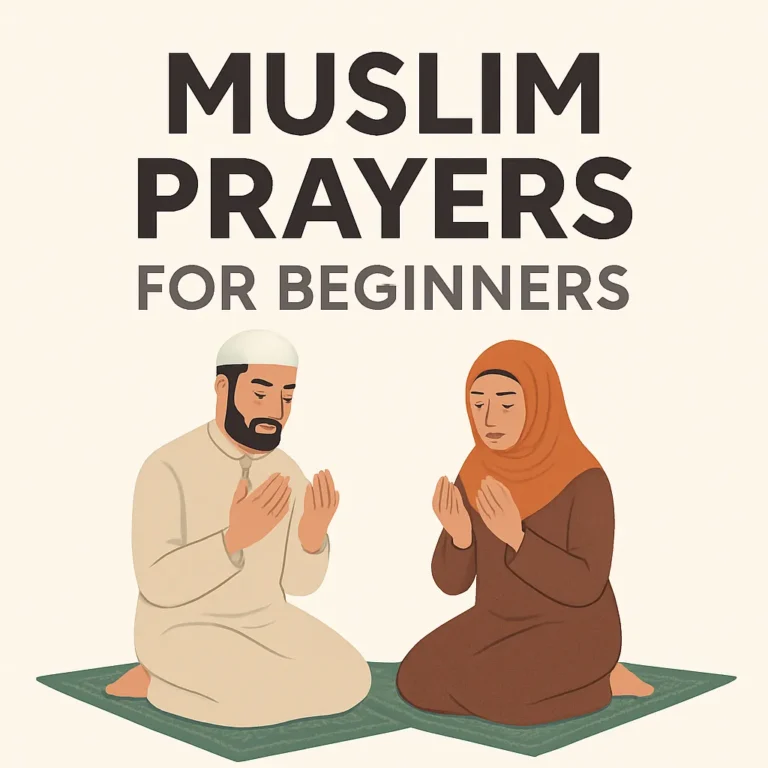
Muslim Prayers for Beginners: A Practical Guide to Salah and Wudu
This article is crafted as a practical, beginner-friendly resource for anyone seeking to learn how to perform Salah (the Muslim prayer) and Wudu (ablution).
Whether you are new to Islam or returning to regular prayer after a break, this guide emphasizes accessibility,
clear steps, and plenty of practical tips. Throughout, you will find variations of the phrase “muslim prayers for beginners” used to broaden context and help you recognize synonyms and related
searches that learners frequently ask about. The goal is to equip you with confidence, consistency, and a solid
foundation for daily worship.
What is Salah? A Beginner-Friendly Overview
Salah is the centerpiece of a Muslim’s day, a structured form of prayer that connects a believer to
Allah. It is performed five times a day, at prescribed times, and consists of prescribed actions and supplications.
For many newcomers, the idea of praying in a new language, with new movements, can feel intimidating. This section
will demystify the practice and introduce you to the core ideas behind Salah for beginners and
the overall rhythm of daily worship.
Purpose: Salah is a direct conversation with God, a moment of humility, gratitude, and remembrance.
Structure: Each unit of prayer is called a rak‘ah. Most daily prayers include multiple
rak‘ahs that you perform in a fixed sequence.
Components: An authentic Salah contains intention (niyyah), takbir,
standing, bowing (ruku), prostration (sujood), and final salutations. In between, you recite verses from the
Qur’an and short supplications.
If you search for beginner prayers in Islam or how to begin with muslim prayers for beginners,
you’ll encounter a wealth of resources, but the core remains the same: begin with cleanliness (wudu),
prepare your heart with niyyah, perform the postures in order, and recite the prescribed verses.
Wudu: The Ablution Before Prayer
Before you can perform Salah, you typically perform Wudu, the ritual cleansing that
prepares the body and mind for standing before God. In many communities, Wudu for beginners is
learned first because it teaches the discipline of cleanliness, intention, and mindfulness.
Why Wudu Matters for Muslim Prayers for Beginners
Performing Wudu correctly helps you cultivate focus and respect for the prayer. It also ensures
you are in the proper physical and spiritual state to stand before Allah. While the exact steps can vary slightly
among schools of thought, the essential aims are the same: cleanse what is obligatory, remember God, and prepare
your heart for Salah.
Steps of Wudu: A Practical, Step-by-Step Guide
Below is a clear, beginner-friendly sequence. Use it as a reliable starting point, and adjust as needed
to fit your local practice or guidance from a trusted teacher.
Intention (Niyyah) in your heart. You don’t say words aloud; you consciously intend to purify
yourself for the worship of God.
Bismillah—Begin with the name of God.
Wash the hands up to the wrists three times, ensuring between the fingers and nails is clean.
Rinse the mouth and rinse the nose—each three times. Spit and sniff water gently.
Wash the face from the hairline to the chin and from ear to ear, three times if possible.
Wash the arms up to the elbows, starting with the right arm, then the left, three times each.
Wipe the head with wet hands once, passing from front to back and back to front if you wish.
Wipe the ears with the same water: use your index fingers inside the ears and your thumbs behind the ears (optional).
Wash the feet up to the ankles, starting with the right foot, ensuring between the toes is clean, three times each.
Note: Some traditions emphasize doing each part three times, while others permit washing
parts fewer times if time is limited or if you are a beginner. The most important thing is to perform the required
parts with care and to maintain consistency as you grow more comfortable. If you are unsure, ask a
knowledgeable person in your local mosque or refer to a trusted teacher about wudu for beginners.
Dua After Wudu
After completing Wudu, many Muslims recite a short supplication to thank God for the cleansing
and to seek acceptance of the upcoming prayer. A common, beginner-friendly form is: “Allahumma ja’alni minat-tawwabeen waj’alni minal-mutatahhireen.”
Translation: “O Allah, make me among those who turn in repentance and make me among those who purify themselves.”
Preparing for Salah: The Essential Mental Step
Before you begin any Salah for beginners, take a moment to focus your intention
and acknowledge that this is a moment of sincere worship. The niyyah is an internal decision:
you are choosing to stand before God in humility and worship. In addition to the inner intention, you will
follow a physical sequence of movements and recitations that structure your worship.
The Core Structure of Salah: How to Perform a Rak‘ah
A rak‘ah is a unit of prayer. A typical daily prayer consists of multiple rak‘ahs, each
built from the same essential actions and phrases. For beginners, here is a straightforward, practical breakdown:
Standing (Qiyam): Face the Qibla (the direction toward the Kaaba in Mecca). Begin with the intention
and then say “Allahu Akbar” (God is the Greatest).
Recitation: While standing, recite verses from the Qur’an, beginning with Al-Fatihah (the opening chapter)
and followed by another short passage or verses. For beginners, recite Al-Fatihah clearly and with effort.
Ruku (bowing): Bow with your back and neck aligned. In this position, say a brief supplication, such as “Subhana Rabbiyal Adheem” (Glory be to my Lord, the Almighty) three times.
Stand up from the bowing, returning to a Straight Standing position, and say “Sami’ Allahu liman hamidah”
or simply “Allahumma Rabbana wa laka al-hamd” as you rise.
Sujood (prostration): Prostrate with the forehead, nose, hands, knees, and toes touching the ground. In this position,
recite “Subhana Rabbiyal A‘la” (Glory be to my Lord, the Most High) three times.
Jalsa (sitting between two sujood): Sit briefly between the two prostrations, offering any personal supplications you wish.
Sujood (second prostration): Perform a second sujood with the same recitations as the first.
Recitations to Learn for Beginners
The core recitations of a rak‘ah are in Arabic, with translations that help you understand their meanings.
Al-Fatihah (The Opening) – a supplication for guidance, mercy, and blessing.
Optional Qur’anic verses after Al-Fatihah (short passages are common for beginners).
Glory phrases during ruku and sujood (e.g., “Subhana Rabbiyal Adheem” and
“Subhana Rabbiyal A‘la”).
Pray Like a Beginner: Daily Prayers (Five Daily Prayers)
In the classic practice of muslim prayers for beginners, the five daily prayers are commonly
observed with a fixed number of rak‘ahs and a consistent structure. Here is a practical overview:
The numbers above reflect the classic Sunni practice. Some communities perform additional voluntary prayers
(nawafil) before or after the obligatory ones. As a beginner, focus first on learning the fard (obligatory)
acts and the essential recitations. Then you can gradually add voluntary prayers to deepen your relationship with God.
Key Pillars and Essentials of Salah
Understanding the pillars of Salah helps you build a solid routine. While there are variations in
terminology among schools, the essential components are consistent across most beginner guides to prayers.
Niyyah (intention) — the internal decision to pray for Allah’s sake.
Takbir al-Ihram — saying “Allahu Akbar” to enter into the prayer.
Qiyam (standing) for those who can; if you’re unable, you may perform a seated alternative as allowed by guidance.
Qiraa (recitation) of Al-Fatihah and other Quranic verses.
Ruku (bow) to show humility before God, with appropriate supplications.
Sujood (prostration) as the most intimate form of worship, placing the forehead and nose on the ground.
Tashahhud (testimony) in the sitting position, bearing witness to the oneness of God and the prophethood of Muhammad.
Salam — the final greeting, turning the head to the right and then to the left while saying the salutations.
Common Mistakes in Beginner Prayers and How to Avoid Them
Many new Muslims encounter recurring questions as they learn muslim prayers for beginners.
Here are some common pitfalls and practical fixes:
Not facing the Qibla: Always face the direction of the Kaaba when possible; if you’re traveling, face the current
direction you are oriented toward for prayer.
Hasty recitation: Speak clearly and deliberately for the words you recite in Al-Fatihah and in each position.
Skipping steps: Try to maintain the order: niyyah → takbir → qiyam → ruku → sujood → tashahhud → salam.
Forgetting the inner supplications: Although the exact Arabic phrases are important, the intention and humility
behind them matter even more. You can gradually memorize more phrases with time.
Inconsistent Wudu: Strive to be consistent in cleanliness. If you’re unsure about any part of Wudu, review
the steps with a teacher or local scholar.
Practical Tips for Building a Regular Practice
Here are some practical, beginner-friendly tips to help you establish a sustainable routine for beginner prayers.
Set small, achievable goals: Start with learning the method of Wudu and performing two rak‘ahs of a simple prayer,
then gradually add more prayers as you gain confidence.
Use a prayer app or a printed guide that shows the order of movements, the obligatory parts, and the du’as.
Practice the key phrases aloud until you can recite them from memory, and then begin to add the longer supplications.
Establish a routine: Pick a consistent time for practice, preferably after a quiet period when you can focus.
Seek a friendly learning circle at a local mosque or community center. Practicing with others can boost motivation and
provide immediate feedback.
Sample Practice Plan for Weeks 1–4
The following plan is designed to help you progress from a complete beginner to a more confident practitioner. It emphasizes
gradual growth and steady habit formation.
Week 1: Learn Wudu, recite Al-Fatihah in a single rak‘ah, and perform two rak‘ahs of Fajr or two basic rak‘ahs of a
voluntary prayer. Focus on the order of actions rather than exact words.
Week 2: Add two more rak‘ahs to the practice, review the position of Ruku and Sujood, and recite Al-Fatihah with
a short additional portion after it.
Week 3: Incorporate Tashahhud and Salam; practice the full two rak‘ahs for Fajr and the two or four rak‘ahs for Dhuhr.
Week 4: Begin building the habit of performing the complete daily prayers (Fajr, Dhuhr, Asr) at least on a regular
schedule, with attention to cleanliness and concentration.
Variations of the Topic: Broadening the Language of “Muslim Prayers for Beginners”
In the process of learning, you may encounter many ways to phrase the same request. Depending on your community, you might
hear:
Beginner’s guide to Salah, focusing on the fundamentals and simplest practice.
Salah for novices or new to prayer in Islam, emphasizing patient, clear steps.
Introduction to Wudu and Salah for those exploring the faith and wanting a gentle start.
Beginner prayers in Islam in community classes or mosque programs.
Glossary of Key Terms for Muslim Prayers for Beginners
Understanding the terminology helps you connect with your practice more deeply. Here are some essential terms:
— intention, the inner decision to perform worship for God.
Takbir — declaring Allāhu Akbar and entering into worship.
Qiyam — standing during prayer, reciting verses of the Qur’an.
Ruku — bowing, showing humility before God.
Sujood — prostration, the deepest form of worship, with forehead and nose touching the ground.
Tashahhud — the testimony recited while sitting, acknowledging God and the Prophet Muhammad.
Salam — ending the prayer by turning the head to the right and left and saying the salutations.
Frequently Asked Questions for Beginner Muslims
Here are quick answers to common questions beginners often ask about Muslim prayers for beginners:
Can I pray in my home? Yes. Salah can be prayed anywhere clean and in a state of ritual purity. In a home, you can create a small, peaceful corner for focus.
What if I forget a part of the prayer? If you forget a non-fard part, you may complete the prayer as usual and repeat the missing portion if necessary; your intention and sincerity matter most. If you miss a fard portion, seek guidance from a local scholar on how to rectify.
Is it okay to pray quietly? In solo prayers, you can recite aloud (especially in early morning prayers) or softly, depending on your surroundings and level of comfort.
How long does it take? A basic two-rak‘ah prayer can take a few minutes; a full daily prayer sequence may take 10–15 minutes as you become more comfortable.
The journey toward mastery of muslim prayers for beginners is a gradual process guided by practice, patience,
and humility. The most important elements are regularity, sincere intention, and a growing
ability to focus during the acts of worship. Over time, the movements will become more natural, the recitations more memorable,
and your connection with God deeper.
In this guide you’ve learned about Salah and Wudu, the essential steps for a beginner,
the five daily prayers, tips to avoid common mistakes, and a plan to build a steady practice. Whether you search for
“beginner prayers in Islam” or “muslim prayers for beginners,” the core message remains the same: approach with
sincerity, practice consistently, and seek knowledge from trusted teachers and communities. May your prayers be a source of
peace, guidance, and closeness to the Divine.