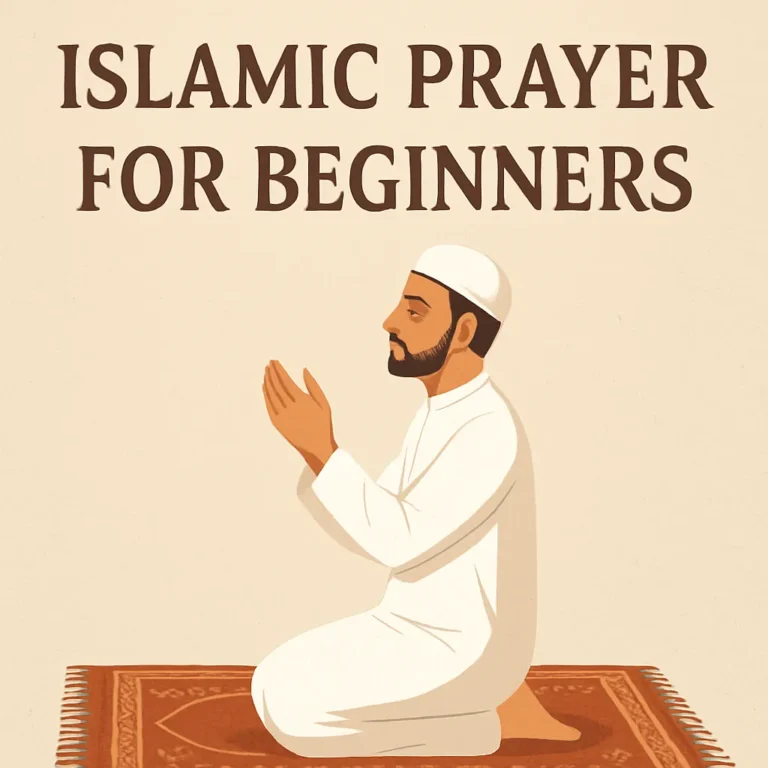
Islamic Prayer for Beginners: A Gentle, Step-by-Step Introduction
Islamic prayer, known in Arabic as Salah (also called Namaz in some communities and Salat in transliteration), is a central practice for Muslims around the world. This article offers a comprehensive, beginner-friendly guide to how to perform prayer, with clear steps, practical tips, and explanations of the essential concepts that underpin the practice. Whether you are just starting to learn or seeking a reliable refresher, this guide aims to be both faithful to tradition and easy to follow in daily life.
The purpose of the daily prayers is to create a direct, peaceful connection with God, to cultivate gratitude, and to structure the day around moments of remembrance and humility. While the mechanics can feel detailed at first, the process becomes more natural with practice. The focus below is on a straightforward, universally applicable method suitable for beginners, with notes on common variations across traditions.
What you need to know before you begin
A few core ideas help beginners approach Salah with confidence:
Purity and cleanliness (taharah) are the foundation. This usually means performing ablution (wudu) or, when needed, full ritual purification (ghusl) or tayammum if water is unavailable.
Purified clothing and space help maintain concentration. A clean area and modest clothing, free from distractions, support better focus.
Direction toward the Qibla (the direction of the Kaaba in Mecca) is essential for most Muslims. When you know the direction, facing it consistently becomes a simple routine.
Intention (niyyah) is a silent inner resolve that you are performing the prayer for the sake of God at the specified time and for the specified number of units (rak’ahs).
Preparing for prayer: purification, environment, and timing
Cleanliness and Wudu (ablution)
The most common preparation for the daily prayers is wudu, a ritual washing that removes impurities and helps the mind focus. Here is a practical, beginner-friendly sequence:
Intent (niyyah): In your heart, intend to perform wudu to become pure for prayer.
Wash the hands up to the wrists, making sure water reaches between the fingers.
Rinse the mouth and sniff water up the nose, expelling it softly.
Wash the face from hairline to chin and from ear to ear.
Wash the forearms from wrists to elbows, one arm after the other.
Wipe the head with a damp hand or rinse once and pass your wet hands from front to back over your head.
Wipe the ears with your damp fingers, usually by lightly inserting the index fingers into the ears and wiping the backs with the thumbs.
Wash the feet up to the ankles, ensuring water reaches between the toes. If you perform a partial wash, make sure you have intention and balance in your practice.
If water is not available or is restricted, you may perform tayammum (dry purification) using clean earth or dust, following the local guidance you have learned.
Purity of intention, space, and timing
In addition to physical cleanliness, you should ensure that your intention is clear in your heart and that you have a clean, quiet place facing the Qibla. The time of prayer is determined by the sun’s position and local schedules, and it’s helpful to learn the main prayer times in your area so you can plan ahead.
For beginners, the practical advice is simple: wear clean clothes, use a clean prayer mat if you have one, and choose a space free of heavy distractions. During the prayer, you will adopt a sequence of postures—standing, bowing, prostrating, and sitting—so comfortable clothing that does not restrict movement is important.
The essential structure of Islamic prayer: rak’ahs, positions, and recitations
A standard daily prayer consists of multiple rak’ahs (units). The number of rak’ahs varies by prayer:
Fajr (the dawn prayer): 2 rak’ahs
Dhuhr (the noon prayer): 4 rak’ahs
Asr (the afternoon prayer): 4 rak’ahs
Maghrib (the sunset prayer): 3 rak’ahs
Isha (the night prayer): 4 rak’ahs
Each rak’ah follows a similar sequence of movements. The core moments are:
Standing and reciting the opening chapter, Surah Al-Fatiha, and, in most prayers, a short additional surah or verses.
Ruku (bowing) with Subhana Rabbiyal Azeem (glory be to my Lord, the Almighty) proclaimed repeatedly.
Sujood (prostration) with Subhana Rabbiyal A’la (glory be to my Lord, the Most High) proclaimed multiple times.
Tashahhud (testimony) and, in longer prayers, Salawat (blessings on the Prophet) and supplications.
After finishing the final rak’ah of the prayer, most Muslims conclude with the salām by turning the head to the right and then to the left while saying “Assalamu alaikum wa rahmatullah”.
Step-by-step guide for beginners: performing a basic two-rak’ah and a typical four-rak’ah prayer
Below is a practical, beginner-friendly walkthrough that applies to most standard prayers. We will cover two common scenarios: a short two-rak’ah prayer (like Fajr) and a longer four-rak’ah prayer (like Dhuhr or Asr), highlighting where variations may occur.
Step 1: Purification and intention
Enter the prayer area with a calm mindset, after performing wudu (or tayammum if needed).
Make the intention (niyyah) in your heart for the specific prayer you are about to perform and the number of rak’ahs you will complete.
Face the Qibla and stand upright. Raise your hands to your ears or shoulder level, depending on your tradition, and say “Allahu Akbar” (Allah is the Greatest).
Step 2: First rak’ah — opening recitation and Surah Al-Fatiha
Recite Surah Al-Fatiha (the opening chapter). This is obligatory in every rak’ah.
Recite another short surah or a few verses aloud in the first two rak’ahs, especially for the obligatory prayers that require silent recitation. In congregational settings or for certain prayers, recitation may be recited quietly or aloud depending on the school of thought and the context.
Raise your hands and bow (Ruku), keeping your back straight and looking at the place of prostration. Say “Subhana Rabbiyal Azeem” (glory be to my Lord, the Mighty) at least three times.
Rise to a standing position (I’tidal) and say, “Sami’ Allahu liman hamidah” (Allah hears those who praise Him), followed by “Rabbana lakal-hamd” (Our Lord, to You is the praise).
Step 4: The prostrations — sujood
Prostrate on the ground with the forehead, nose, palms, knees, and toes touching the floor. Say “Subhana Rabbiyal A’la” at least three times in the first sujood, and again in the second sujood.
Sit briefly between the two Suhds, reciting a short supplication if you prefer, and then perform the second sujood with the same phrases.
Step 5: Second rak’ah — recitation and second bow
Stand up for the second rak’ah and repeat the sequence: recitation of Al-Fatiha plus another short surah, followed by Ruku’, and then Sujood again.
Step 6: Attaining tashahhud and final steps for a two-rak’ah prayer
Sitting for the Tashahhud after the second sujood, reciting the testimony: “At-tahiyyatu lillahi was-salatu wat-tayyibatu, assalamu alayka ayyuhannabi, wa rahmatullahi wa barakatuh. Assalamu alayna wa-‘ala ibadillahi-s-salihin. Ashhadu an la ilaha illallah, wa ashhadu anna Muhammadan abduhu wa rasuluh.” (A simplified version can be used by beginners; later you may add the blessing on the Prophet and du’a).
Turn your head to the right and say “Assalamu alaikum wa rahmatullah”.
Turn your head to the left and repeat the same phrase, completing the prayer.
Step 8: For a four-rak’ah prayer — how it extends
In a typical four-rak’ah prayer, you perform the first two rak’ahs as above, and after the second sujood of the second rak’ah, you sit for the Tashahhud, then rise for the third rak’ah and repeat the recitation and movements.
In the third rak’ah, after Al-Fatiha and a short surah, you perform Ruku’ and the two sujoods again, followed by the fourth rak’ah, which ends with the final Tashahhud and the termination with Salam.
Step 9: Optional supplications after prayer
After completing the prayer, many Muslims include individual supplications or repeat the du’a of gratitude. A common, beginner-friendly example is: “Allahumma ighfirli warحمني وارزقني” (O Allah, forgive me, have mercy on me, and grant me provision). You may also recite the well-known supplications reported from the Prophet Muhammad for protection, guidance, and gratitude.
Variations you may encounter: understanding different approaches
Recitation styles across madhhabs (schools of thought)
There are variations in the way recitations and certain timings are observed in different legal schools. Here are the broad strokes you may encounter:
Hanafi tradition often emphasizes recitation of Al-Fatiha and a short surah in the first two rak’ahs, with silent or soft recitation for some prayers, and a strong emphasis on proper posture in bowing and prostration.
Maliki practice tends to be similar to other schools for the basic steps, with nuanced emphasis on certain supplications and the way prayers are performed in congregational settings.
Shafi’i and Hanbali approaches commonly align on the structure described above, with minor differences in the recitation loudness and the timing of some words in du’a or in the use of Basmala (the phrase “Bismillahir Rahmanir Rahim”).
Silent vs aloud recitation
For beginners, the safe starting point is to recite Al-Fatiha and the extra surah softly (silently) in the private (non-congregational) setting, or at a whisper in a mosque or prayer hall where appropriate. In some cases, such as during congregational prayer led by an Imam, you may listen to the Imam’s recitation rather than reciting aloud yourself in certain rak’ahs. The main goal is focus, not the volume of your voice.
Two-rak’ah situations vs four-rak’ah situations
Beginners may start with a simple two-rak’ah practice (such as the Fajr prayer) to build familiarity, then gradually progress to four-rak’ah prayers as confidence grows. It’s perfectly acceptable to practice with a shorter routine and extend your practice as you feel comfortable.
Common mistakes and practical tips for accurate practice
Rushing the movements can break concentration. Take your time to complete each position with calm, deliberate motion.
Forgetting the intention (niyyah) or mixing intentions between prayers. Re-center your focus and remind yourself of the purpose before beginning.
Incorrect sequence of positions (e.g., skipping Ruku or Jalsa). Try to memorize the order and practice slowly.
Incomplete Wudu or invalid purification due to missed steps. If unsure, redo the purification correctly before praying.
Not facing the Qibla or misaligning your body during the bow and prostration. Align yourself with your feet shoulder-width apart and the chest open to the direction of prayer.
Post-prayer guidance: reflection, gratitude, and ongoing practice
After completing Salah, many Muslims spend a moment in quiet reflection, expressing gratitude to God for guidance, mercy, and strength. It is also common to recite additional supplications, seek protection, and offer blessings on the Prophet Muhammad. Regular practice helps you internalize the steps, deepen your concentration, and cultivate a steady rhythm in daily life.
What to do if you miss a rak’ah or perform it incorrectly
If you realize you have made a mistake during the prayer, different schools offer different remedies. A common approach for beginners is to complete the prayer with the correct number of rak’ahs you intended, then perform a regressive prostration (sujood sahw) after the final salam in some circumstances. If you are uncertain, seek guidance from a knowledgeable local teacher or Imam who can provide advice based on your tradition.
Daily routine options for beginners
Start with the two-rak’ah practice for Salah al-Fajr, then gradually add a two-rak’ah extension as you get comfortable with the sequence.
Maintain consistency in recitation by choosing one short surah to recite after Al-Fatiha in each rak’ah until you feel confident to add more verses.
Keep a small notebook or a digital note with reminders of the order of movements and phrases for quick recall during practice.
FAQs for beginners: practical clarifications
Q: How do I know which direction to face?
A: The Qibla is the direction toward the Kaaba in Mecca. If you are unsure, you can use a compass app, online Qibla finders, or ask a local mosque for guidance. In unfamiliar places, a simple approach is to find the shortest path toward what is commonly recognized as the Qibla from that location and adjust as needed.
Q: Can I pray in a language other than Arabic?
A: The essential parts of Salah—the recitation of Al-Fatiha in each rak’ah and the core phrases—are traditionally in Arabic. Some beginners begin with translation or transliteration to understand the meaning, while continuing to recite the Arabic verses. After you are comfortable, you can gradually add personal supplications in the language you are most comfortable with, especially in the post-rak’ah supplications.
Q: What is the difference between obligatory and voluntary prayers?
A: The obligatory prayers (fard or wajib depending on tradition) are the five daily prayers described above, which you should strive to perform on time. There are also numerous voluntary prayers (nafl) you can perform to earn extra reward, such as two rak’ah before or after the obligatory prayers, night prayers (Taraweeh in Ramadan or Tahajjud in the late night), and other optional recitations.
Conclusion: embracing a lifelong practice with clarity and reverence
Islamic prayer for beginners is not just a set of motions; it is a practice that invites stillness, discipline, and a direct connection with God. By focusing on purification, intention, proper posture, and mindful recitation, you can cultivate a meaningful daily habit. Remember that progress comes with patience and consistent practice. Use this guide as a reliable companion on your journey, and feel free to revisit sections as you gain confidence. Over time, the steps will become second nature, and the moments of contemplation and gratitude will become a natural rhythm in your day.
If you would like, I can tailor this guide to your specific tradition or local practice, include a printable checklist for your travel or work routine, or provide audio clips that demonstrate the pronunciation of key phrases. May your steps in prayer bring you peace, focus, and a deeper sense of connection.