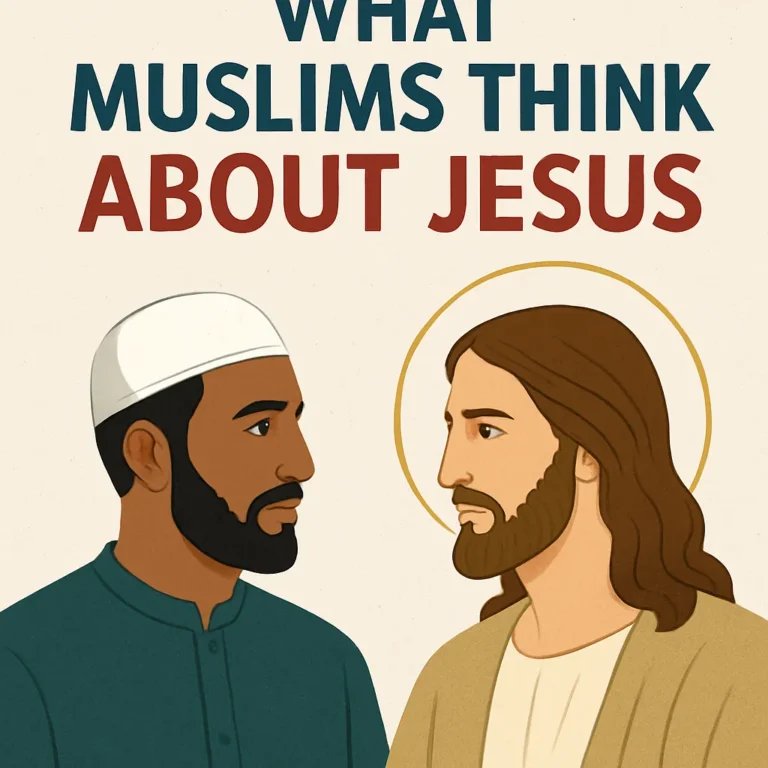
Introduction: Why a Study of Jesus Matters in Islam
In the religious landscape of the world, few figures are as widely discussed as Jesus.
Within Islamic tradition, Jesus (known in Arabic as Isa) is not a peripheral character
but a central element of the prophetic narrative. This article explores what Muslims think about Jesus
from an Islamic perspective: his identity as a prophet, his miraculous birth, his mission,
the story of his crucifixion from the Qur’an’s point of view, and his eventual return at the end of times.
By tracing the language of the Qur’an, the teachings of the Prophet Muhammad, and the consensus of Muslim scholars,
we gain a comprehensive understanding of how Jesus is understood in Islam — as a revered servant of God, a
messenger who confirmed prior revelations, and a precursory sign of the Last Day.
Who Is Jesus in Islam?
The Islamic portrait of Jesus is multifaceted. Muslims honor him as one of the great prophets and one of the messengers of God, but they do not worship him or regard him as divine. The Qur’an
presents Jesus as a historical figure who was both born miraculously and endowed with divine permission to perform
miracles. He is repeatedly named with a range of honorifics, each highlighting a particular aspect of his mission,
and his life is situated within the broader narrative of God’s guidance to humanity.
Ruh Allah — “the Spirit of God,” a designation whose exact interpretation is discussed by scholars.
Nabi and Rasūl — “Prophet” and “Messenger,” indicating his role as a bearer of divine revelation.
These titles together convey a nuanced picture: Jesus is a divinely appointed human being with an important
message, not a divine person. The emphasis is consistently on his obedience to God, his
role as a carrier of revelation, and his place within the chain of prophets who guide humanity.
Birth and Miracles: The Early Life of Isa
One of the most striking narratives about Jesus in Islam concerns his birth and the miracles that surround him.
The Qur’an describes a miraculous birth to the Virgin Mary, Maryam, without a father. This
event is presented as a sign from God, demonstrating His power to create life and to shape history according
to divine wisdom.
The Virgin Birth: Maryam as a Model of Faith
Maryam is accorded a highly honored position in the Qur’an. She is praised for her chastity, piety,
and steadfastness in the face of trial. Her story is not a sidebar; it is integrated into the larger picture of
miraculous birth and divine favor. Muslims regard Maryam as one of the most virtuous figures among women and
a model of devotion to God.
Miracles Demonstrated by Isa
The Islamic tradition attributes several miracles to Jesus, all accomplished by the permission of God.
Healing the blind and the leper and restoring life to the dead, by God’s will.
Creating a bird from clay and bringing it to life, again by God’s permission.
Messages spoken in early childhood that affirmed his prophetic mission and demonstrated his restraint in
speaking on his own accord.
These miracles are not presented as demonstrations of Isa’s inherent power, but as signs that point to God’s
sovereignty and mercy. In Islam, prophethood is not about personal prowess; it is about delivering a message
and bearing witness to God’s unity.
Crucifixion, Death, and Ascension: The Qur’anic Perspective
A central divergence between Islamic and Christian narratives concerns the events surrounding the crucifixion.
The Qur’an explicitly states that Jesus was not crucified nor killed in the ordinary sense. Instead, it teaches that
he was raised up to God. The exact mechanism is not detailed in the Qur’an, and classical and modern commentators
differ on whether another person was made to appear like Jesus or whether the moment of crucifixion was hidden from
those who sought to kill him.
The key Qur’anic verse in this regard is often cited as showing that Jesus was not slain:
“And they did not kill him, nor did they crucify him; but it appeared to them so.”
From this point, Muslims derive the conclusion that Jesus was raised to God and that his mission continued in
a form beyond crucifixion. For many Muslims, this event serves as a sign of God’s protection of his messengers and
a reminder that God has ultimate control over life, death, and history.
Ascension and Return
Muslims commonly teach that Isa was raised to heaven and will return in the last days. This is not a claim about
immortality in the everyday sense; rather, it reflects a future event in which Isa resumes his prophetic role,
defeats corruption, and restores justice under God’s guidance. The exact timing is known only to God, and he is
described as a sign of the approaching Day of Judgment.
The Injil and the Message of Isa: Books, Gospel, and Monotheism
In Islamic belief, Isa brought the Injil (often translated as “Gospel”) — a revelation that
confirmed the truth of the Torah given to Moses and called people to the one God,
to righteousness, and to moral accountability. The Qur’an makes a crucial distinction:
the Injil as a divine revelation given to Jesus is not the same as the later Christian Gospels.
Muslims hold that the original Injil was a divine message, but that over time, human authorship and editorial
changes may have altered or supplemented what was originally revealed.
Gospel versus Gospel: How Muslims Read Isa’s Scripture
Muslims commonly say that Isa’s Injil called people to worship Allah alone and to follow
a path of righteous living. It is believed to have reinforced the monotheistic core present in prior revelations.
The distinction between the Qur’an’s account and later Christian writings is often highlighted in modern Muslim
scholarship as a reminder that revelation is part of a continuous, evolving relationship between God and humanity.
The Maryam Tradition: Mary as a Model of Faith
The figure of Maryam is intertwined with the story of Isa in the Qur’an. She is portrayed as a devoted
believer, a symbol of virtue under pressure, and a reminder of God’s grace. In many Muslim communities,
Maryam’s character is cited in sermons and ethical discussions as a model of steadfast faith, humility, and
submission to God’s will.
Jesus’ Mission and Message: Monotheism, Prophethood, and Ethical Teaching
The core of Isa’s message in Islam is captured by the tradition that emphasizes the oneness of God
(tawhid) and the moral responsibilities that follow from it. Isa is presented as a servant of God
who called people back to pure worship of the Creator.
Central Doctrinal Points
Prophethood and mission to guide humanity, not to introduce new divinity or to replace God.
Reaffirmation of prior revelations (the Torah and the Gospel) within a framework of monotheism.
Ethical exhortation — compassion, humility, justice, charity, and care for the vulnerable.
Common Areas of Continuity and Difference
Muslims and Christians share reverence for Jesus as a figure of profound moral and spiritual significance.
Yet, Muslims explicitly reject the idea of Jesus as the Son of God or as a part of a
divine Trinity. In Islam, God is one in a way that excludes any partners or offspring.
Jesus is thus acknowledged and honored as a prophet who played a pivotal role within God’s plan
for humankind, rather than as a divine manifestation.
Jesus in Islamic Eschatology: The Return at the End of Time
A distinctive component of Islamic eschatology is the belief in Isa’s second coming. According to
authentic narrations, Isa will return to earth before the Day of Judgment to restore justice and to defeat the
false messiah, the Dajjal. This return is understood as part of God’s sovereign plan, not as a mere
miracle or historical event.
He will judge with knowledge from God and uphold divine justice.
He will reject false claims and correct theological misunderstandings, reinforcing true worship of God.
He will establish peace and harmony for a period, often described as a generation or a span of years during which
societies live in justice and mercy.
After fulfilling his mission for a finite period, Isa is believed to pass away and be raised to God, in a manner
similar to other prophets who lived, taught, and then died, before the Final Day. The precise sequence and
chronology vary among scholars, but the overarching theme remains: Isa’s return is a sign of God’s ultimate plan
to establish moral order and to vindicate the truth of monotheism.
A Comparative Lens: How Muslims Distinguish Isa from Other Figure(s) in World Religions
When Muslims discuss Jesus, they often engage in comparative reflection—how Isa’s portrayal in Islam
aligns or diverges from accounts in other traditions. Key distinctions include:
Divinity: Islam rejects Jesus’ divinity and the claim that he is God’s son; Jesus is a creature and a servant of God.
Crucifixion: Islam generally asserts that Jesus was not crucified, whereas Christian belief holds that Jesus
died on the cross for human sins and rose again.
Scripture: The Qur’an presents Isa’s life through revelation given to him, while Christian traditions rely on the
New Testament documents, which Muslims view as part of a historical-religious development with later modifications.
Variations Within the Muslim World: Sunni, Shia, and Other Perspectives
The broad Islamic consensus treats Jesus as a prophet and a messenger. However, some nuance exists across schools and
traditions:
Sunni Islam: Emphasizes Isa’s prophethood, miraculous birth, and the eventual return as a world-renown sign of the Last Day.
Shia Islam: Shares the basic creed about Isa’s status and return, often focusing on his role in eschatology and moral leadership.
Sufi interpretations: Some Sufi authors read Isa’s inner spiritual elevation, beauty of devotion to God, and the realization of tawhid as a path toward mystical purification.
Common Questions and Misconceptions About Jesus in Islam
In engaging with people of various faiths, Muslims often address common questions and misconceptions about Isa:
Was Jesus divine? No. In Islam, Jesus is divine only as a human servant of God; God alone is divine.
Did Jesus exist in Islam? Yes. His life and mission are described across the Qur’an and hadith literature as part of the prophetic tradition.
Did he die on the cross? The Qur’an teaches that he was not killed or crucified; he was raised to God, and his return is a future event.
What about the Injil? Muslims believe Isa carried a revelation called the Injil, which affirmed monotheism and ethical conduct.
In daily discourse, Muslims often speak about Isa with reverence and moral clarity. Some patterns you may observe:
Addressing Isa with great respect in prayers and sermons, while maintaining the boundary between worship and prophethood.
Using Isa as a lens to discuss monotheism and the dangers of elevating any human being to divine status.
Highlighting Isa’s compassion, humility, and obedience to God as ethical exemplars for believers.
Isa’s portrayal in Islam carries several theological implications that resonate across the broader Muslim worldview:
Affirmation of monotheism: Isa’s life emphasizes that true worship belongs to God alone, without partners.
Prophetic continuity: Isa is part of a long line of prophets who came with guidance to humanity, culminating in a message of accountability and mercy.
Divine sovereignty: The events surrounding Isa illustrate that ultimate control over life, death, and history rests with God.
The reverence for Isa is not only theological but also cultural. Across Muslim-majority regions, Isa is a figure who
appears in khutbas (sermons), poetry, art, and everyday conversation. His story often intersects with
discussions about Maryam, virtue, patience in the face of trial, and the importance of heeding prophetic guidance.
In interfaith discussions, Isa frequently serves as a bridge figure. Honoring his prophetic status while
clarifying theological differences can foster mutual respect and constructive dialogue. For Muslims and Christians alike,
Isa’s life invites reflection on universal values such as mercy, justice, humility, and faithfulness to God.
Belief about Jesus, like belief about other prophets, informs Muslim practice in several ways:
Prayer and remembrance: Isa is invoked as a noble figure within the fabric of Muslim remembrance of the prophets.
Ethical conduct: Isa’s obedience and compassion inspire Muslims to live ethically and justly.
Doctrinal clarity: The distinction between divine worship and prophetic leadership helps believers maintain theological precision.
Jesus’ place in Islam is both explicit and nuanced. He is acknowledged as a mighty prophet,
entrusted with a divine message, and revered within the Muslim community for his devotion to God and his
moral example. The Qur’anic portrayal of Isa — his miraculous birth, his miracles by God’s permission,
his rejection of divinity for himself, his ascension, and the anticipated return — offers a coherent
theological framework that both resembles and diverges from Christian accounts.
For Muslims, Isa is a guiding light who points back to the oneness of God, calls people
toward ethical living, and foreshadows the culmination of human history in God’s plan. This perspective
encourages readers to approach Isa with a balanced view: with reverence for his prophetic role,
a clear understanding of his status as a human servant of God, and a hopeful anticipation of his return in the eschatological horizon.