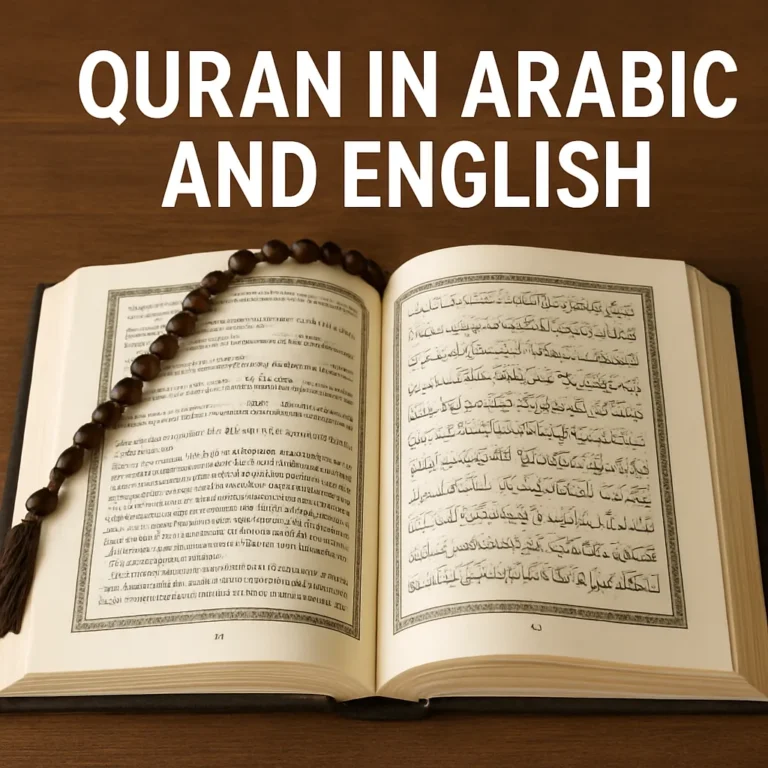
The topic Quran in its original language is most commonly referred to in English as the Qur’ān or Al-Qur’ān, while many readers simply say Quran. In Arabic, the sacred text is known as القرآن الكريم (Al-Qur’ān al-Karīm) or القرْآن (al-Qur’ān) in shorter form. In English, terms such as Qur’anic translation, Quranic translation, Quran text, and The Noble Qur’an appear with varied capitalization and phrasing depending on the translator or tradition.
This complete guide covers both the Quran in Arabic and a spectrum of authoritative English translations, highlighting how these forms complement one another. It also clarifies common misconceptions about translation, how to approach reading in both languages, and practical tips for learners, researchers, and casual readers alike.
Historical background and purpose
The Qur’ān is traditionally understood as the direct revelation from God to the Prophet Muhammad through the angel Gabriel over roughly 23 years in the 7th century CE. In Arabic, the word Quran conveys not only a text but a living, recited, and studied scripture. In English contexts, readers encounter a translation that aims to convey meaning, rhythm, and the spiritual significance of the original, while recognizing the limits inherent to rendering sacred poetry and prose across languages.
Key milestones in the Arabic text and its transmission
Oral recitation (qira): Centers on precise pronunciation, melody, and tajweed rules.
Compilation (mushaf): The Uthmanic codex established a standardized written form of the Qur’ān.
Codification and diacritics: Vowel markings and punctuation to guide proper reading.
Preservation through memorization (hifz) and reformatted printed editions that preserve the traditional order of chapters (surahs) and verses (ayahs).
In English studies, the focus expands to include translation philosophy, commentary (tafsir), and theology and jurisprudence, all of which help readers interpret the text in different cultural and historical contexts.
Arabic Quran: language, script, and distinctive features
The Arabic of the Qur’ān is a form of classical Arabic that carries linguistic features, rhetorical devices, and lexical choices that differ in subtle and profound ways from modern spoken dialects. For readers, the Arabic Qur’ān offers direct access to the revelation, legal and ethical injunctions, narratives, and cosmological statements in their original cadence.
Metre and syntax that produce an intricate rhythm in many surahs.
Lexical density, polysyndeton, and balance between paired verses.
Terminology that covers theological terms (e.g., tawḥīd monotheism, ibadah worship) and moral concepts (e.g., khulq ethics, adl justice).
Tajweed, mushaf, and recitation practice
Tajweed refers to the rules of proper pronunciation and articulation of Arabic letters and sounds.
Mushaf is the printed or manuscript page arrangement of the Qur’ān.
Reciters (qāri) across generations have preserved and transmitted the melodious tradition of tilawa, or recitation, as part of the living link to the divine text.
English translations: purpose, scope, and challenges
English translations of the Qur’ān aim to convey the meaning of the original Arabic text to readers who do not read Arabic. Because the Qur’ān is a linguistic and literary work with layers of meaning, cultural references, and stylistic features, every translation inherently involves interpretation. This section explores why translations exist, how they differ, and what readers should expect from them.
Why translations matter
Accessibility: English translations enable non-Arabic readers to engage with the text.
Interpretive frameworks: Translations reflect the translator’s approach to meaning, nuance, and context.
Scholarly study: Translations often include notes or appendices that explain terms, grammar, and possible ambiguities.
Pickthall (The Meaning of the Glorious Koran) (1930):> A fairly literal rendering that aims for precise diction, reflecting early English Muslim scholarship.
Yusuf Ali (The Holy Qur’an) (1934):> Poetic, interpretive, with extensive commentary notes and a strong emphasis on exhortation and moral lessons.
Muhsin Khan & Muhammad al-Hilali (The Noble Qur’an in the English Language) (late 20th century):> A translation with accompanying hadith-based notes; frequently cited as controversial in some academic circles for its interpretive framing.
Mohammad Saeed Abdel Haleem (The Qur’an) (Oxford World’s Classics, 2004):> Contemporary, readable English with emphasis on clarity over archaisms.
The Study Quran (Seyyed Hossein Nasr et al., 2015):> A comprehensive translation with extensive tafsir-inspired commentary and scholarly apparatus.
The Clear Quran (Mustafá Khattab, 2015–present):> A modern translation designed for straightforward, fluent English with notes on translation choices.
Word-for-word vs. sense-for-sense approaches
Word-for-word translations attempt to preserve lexical order, often producing a literal rendering that can be difficult for modern readers.
Sense-for-sense translations emphasize readability and the intended meaning in contemporary English, sometimes at the expense of exact wording.
Most readers benefit from consulting more than one translation to gain a fuller sense of the text and to understand variations in interpretation.
When reading the Qur’ān in English, it is helpful to consult tafsir (commentaries) that explain the historical context, linguistic choices, and legal or theological implications of verses. The Qur’ān itself emphasizes guidance for humanity, and many verses invite readers to reflect on creation, ethics, and community life.
Practical use: Reading the Qur’ān in Arabic and English
Reading in Arabic
Start with Mushaf al-Qur’ān from a reliable edition that includes diacritics to guide pronunciation.
Learn basic tajweed rules and practice with a qualified teacher or verified audio resources.
Use a tafsir-friendly approach by reading brief explanations alongside verses you study.
Keep a notepad for vocabulary and grammatical notes you encounter in Arabic phrases.
Reading in English
Choose a primary translation and, if possible, compare with a secondary translation for nuance.
Use accompanying notes or tafsir selections to understand historical context and linguistic choices.
Approach the text with patience, noting that some verses convey plural meanings and moral instruction beyond a single literal sense.
Pair reading with listening practice by using audio recitations to hear the rhythm and pronunciation of Arabic while following English translation.
Strategies for beginners
Set a realistic daily reading goal (e.g., a few verses or a page).
Read aloud to reinforce memory and pronunciation.
Annotate words you don’t know and look up glossaries in reliable dictionaries.
Attend a local study circle or online course to benefit from guided discussion and questions.
Interactive Qur’ān portals with Arabic text and multiple translations.
Audio libraries featuring renowned qaris for tilawa (recitation) practice.
Searchable databases for verse references, multiple translations, and tafsir notes.
Audio recitations and learning your way through tilawa
Famous qaris include Abdul Basit and Mishary al-Afasy, among others.
Listening to recitation while following the English translation can help with pronunciation and rhythm.
Tafsīr and commentary resources
Classic and contemporary commentaries that explain verses, contexts, and jurisprudential implications.
Scholar-led introductions to themes like monotheism, ethics, law, and the stories of prophets within the Qur’ān.
Printed editions and digital libraries
Reliable editions of the Arabic Qur’ān with diacritics and textual notes.
Digital editions that allow side-by-side Arabic text and multiple translations for quick comparison.
Common terms and glossary
The following glossary provides concise definitions for frequently encountered terms related to the Qur’ān in both Arabic and English contexts. Terms in bold indicate key concepts readers may wish to memorize.
Ayah (آية): a verse in the Qur’ān.
Surah (سورة): a chapter of the Qur’ān.
Mushaf (مصحف): a printed or manuscript copy of the Qur’ān.
Tajweed (تجويد): the set of rules governing pronunciation during recitation.
Tafsir (تفسير): commentary or explanation of Qur’anic verses and their meanings.
Hifz (حفظ): the memorization of Qur’ān, often as part of a lifelong practice.
Meccan (مكي) and Medinan (مدني): terms describing whether a surah or ayah was revealed before or after the Prophet’s migration to Medina; this distinction affects themes and historical context.
Naskh (نسخ): abrogation; the concept that some verses supersede others in legal or practical application.
Tilawa (تلاوة): the act of recitation of the Qur’ān.
Qira’at (قراءة): variant recitations, often representing regional or canonical stylistic differences in pronunciation.
Reading the Qur’ān—whether in Arabic or English—carries ethical and spiritual responsibilities. Readers should approach the text with reverence, seek to understand its messages in context, and recognize the diversity of interpretations across schools of thought.
Respect for the sacred text includes cleanliness and proper handling of mushaf or digital Qur’ān copies.
When studying, distinguish linguistic meaning from theological or juridical conclusions that may require additional sources (tafsir and jurisprudence).
Engage with translations critically, cross-referencing multiple versions and consulting authoritative commentaries.
A balanced approach respects both the linguistic beauty of Arabic Qur’ān and the explanatory power of English translations, creating a bridge between faith, language, and scholarship.
Conclusion: a lasting bridge between languages, cultures, and understanding
The Quran in its original Arabic form—Al-Qur’ān al-Karīm—remains the centerpiece of revelation for Muslims, a text whose rhythm, grammar, and rhetoric are deeply studied. English translations—whether Qur’anic translations, The Holy Qur’an, or The Clear Quran—offer a window into its teachings for non-Arabic readers, but they inevitably involve interpretive choices. This guide has aimed to present:
How the Arabic Qur’ān is formed, preserved, and recited,
How English translations attempt to convey meaning while acknowledging linguistic limitations,
Practical strategies for approaching reading and study in both languages,
Important terminology to support informed reading and discussion.
Whether you are beginning with a beginner-friendly English translation or diving into the Arabic Qur’ān with tajweed and tafsir, the goal remains: to engage with the text with clarity, humility, and curiosity. By exploring variations of Quran in both Arabic and English, readers can gain a broader semantic breadth and a more nuanced appreciation of this central religious scripture.
If you would like, I can tailor this guide to your interests—whether you are focused on linguistic analysis, memorization techniques, or comparative translation studies. You can also tell me which translations you prefer, and I can offer side-by-side examples to illustrate how different translators render the same verse.