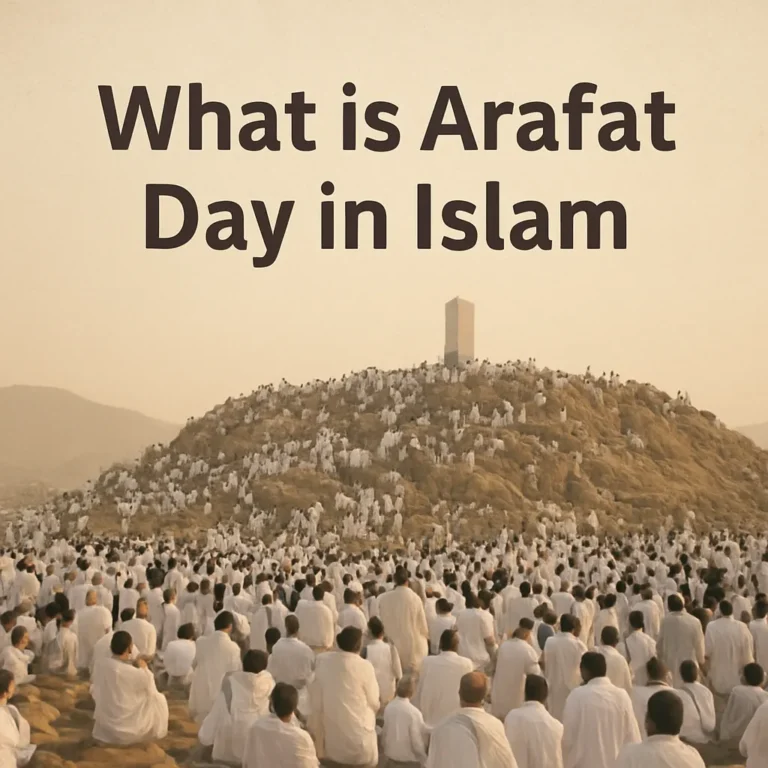
Arafat Day, also commonly called the Day of Arafah, is one of the most significant moments in the Islamic calendar. It occurs on the 9th day of Dhū al-Ḥijjah, the last month of the Islamic year, and its peak coincides with the ritual standing (wuqūf) on the plain of Arafat near Mecca. For Muslims worldwide, this day represents a unique convergence of supplication, repentance, and spiritual preparation. While the world watches in anticipation of the annual Hajj pilgrimage, the Day of Arafah holds meaning for every believer, whether or not they are physically present in Mecca. In exploring what is Arafat Day in Islam?, it is helpful to understand not only the outward rituals tied to the day but also the deeper themes of humility, mercy, and divine forgiveness that tradition associates with it.
Variations on the question “what is Arafat Day in Islam?” appear in discussions, sermons, and guides, reflecting both linguistic nuance and doctrinal emphasis. Some common formulations you’ll encounter include “What is the Day of Arafah?”, “What does Arafat Day mean in Islam?”, and “What is Arafat Day and what should Muslims do on this day?”. Across these expressions, the core idea remains the same: a day of intense worship, communal memory, and the prospect of divine pardon for sins, especially for those who are fasting or making dua with sincerity.
Meaning, Names, and Etymology
The term Yawm al-Arafah translates roughly to the “Day of Knowledge, Recognition, or Knowing” in Arabic, but scholars note that the exact semantic link is nuanced. Some explanations point to the idea that the day is when people come to know themselves before God, recognize their dependence on divine mercy, and acknowledge the unity of God. Others emphasize the proximity of the plain of Arafat to the origin stories of the Prophet Muhammad’s mission, hinting at a moment of revelation-like clarity for the life of the faith. Additionally, the plain of Arafat is a real geographical location near Mecca where the Prophet Muhammad delivered part of his Farewell Sermon, adding to the day’s symbolic weight in Islamic memory.
In terms of naming, you may hear:
Day of Arafah or Yawm al-Arafah – the most common reference.
Arafat Day – a more compact formulation used in everyday speech.
Yawm al-Ḥaqq or Yaumul Ḥaqq in some traditional contexts, though this is far less common and can be contextually specific to certain communities.
Significance in Islamic Tradition
The Day of Arafah stands out in Islam for several, closely related reasons. It marks a climactic moment in the annual Hajj pilgrimage and is also viewed as a day of broad spiritual opportunity for all Muslims, regardless of whether they are in Mecca. The day’s significance rests on three interlocking themes: accountability before God, communal memory of the Prophet’s guidance, and the prospect of divine mercy and forgiveness.
Scriptural and Prophetic Foundations
Quranic echoes: While the Qur’an does not explicitly enumerate the Day of Arafah in a single verse detailing ritual acts, its broader messages—about tawḥīd (monotheism), sincerity, repentance, and reliance on God—provide the doctrinal atmosphere in which Arafah is placed. The day is understood within the Qur’anic framework of accountability and mercy.
Hadith and prophetic tradition: Central to the Day of Arafah is the Prophet Muhammad’s guidance about standing in supplication and remembrance. The wuqūf at Arafat during Hajj is described in prophetic narrations as the essential rite of Hajj; missing this would mean incomplete pilgrimage, as the Day of Arafah is closely tied to the integrity of the Hajj rituals themselves.
Forgiveness and mercy: A widely cited prophetic hadith expresses that on the Day of Arafah, Allah liberates more souls from hell than on any other day, a statement that underscores the day’s unparalleled spiritual opportunity. This emphasis on forgiveness is repeated in many authentic reports and is central to why the day draws such fervent dua (supplication) from Muslims everywhere.
Historically, the Day of Arafah is inseparable from the life of the Prophet Muhammad. The day is linked to the Farewell Pilgrimage (Hajj al-Wada) and the sermon he delivered to a vast audience on the plain of Arafat, which is considered one of the culminating moments of his prophetic mission. The sermon touched on the sanctity of life, property, and the equality of all believers before God, reinforcing the ethical core of Islamic social justice. Theologically, Arafah is seen as a day when people come to know their true condition before God, prompting humility, repentance, and a renewed commitment to righteous living.
Observance and Practices on the Day of Arafah
What to do on Arafat Day? The practical guidance centers on worship, humility, and supplication. The day is rich with opportunities for spiritual renewal, whether one is performing the Hajj or observing the day from afar. Below are the most widely recommended practices, including variations that reflect different schools of thought and cultural traditions.
Fasting on the Day of Arafah
For Muslims who are not performing Hajj, fasting on the Day of Arafah is highly esteemed and is believed to bring substantial spiritual reward. The prophetic guidance suggests that fasting on this day expiates the sins of the previous year and the coming year, fostering a fresh start before God. This practice is especially emphasized for non-pilgrims as a means of drawing near to God through self-discipline and devotion. However, there is a nuanced exception for Hajj pilgrims: many scholars advise against fasting on the Day of Arafah for those who are performing the pilgrimage, since the day involves demanding rites and intense physical exertion. In short, non-pilgrim fasting on Arafah is encouraged in many traditions, while pilgrims during wuquf may be advised to refrain or to fast only if it does not impede the rites.
Supplication, Dua, and Dhikr
Whether fasting or not, a central element of the Day of Arafah is intense dua (supplication) and dhikr (remembrance of God). Believers are urged to ask for forgiveness, mercy, and guidance, and to recite prayers and verses from the Qur’an. The day is seen as opportune for personal petitions as well as collective supplications for family, community, and humanity. Arafah is a moment when the heart is thought to be especially receptive to divine mercy, making sincere prayers particularly impactful.
Many Muslims extend their observance by engaging in acts of charity and self-reflection. A strong emphasis is placed on generosity to the needy, ethical conduct, and patience in the face of life’s tests. The Day of Arafah can thus function as a turning point in which a believer rededicates themselves to acts of kindness, gratitude, and social responsibility.
Prayers and Worship at Home or in Congregation
Even for those not in Mecca, the Day of Arafah can be observed through structured prayer and study. Families may gather to read the Qur’an, listen to sermons, or discuss the day’s significance. Communities around the world often organize educational programs or communal du’a sessions that emphasize repentance, mercy, and the ethical dimensions of Islam.
During the annual Hajj pilgrimage, the most important rite on this day is the wuqūf (standing) at Arafat. Pilgrims spend the daytime hours in prayer, supplication, and contemplation, asking God for forgiveness and mercy. The spiritual gravity of standing on Arafat is such that this moment is believed to represent a public, collective moment of divine closeness and mercy, a life-changing spiritual experience for many pilgrims. For Muslims who are not physically present at Arafat, the memory and symbolism remain powerful reminders to engage with God earnestly and with humility.
Arafah Day and Hajj: Wuquf at Arafat
The Wuquf at Arafat is often described as the essential pillar of the Hajj rite. It is the moment when pilgrims stand, supplicate, repent, and seek forgiveness for their sins. The Prophet Muhammad’s Farewell Sermon, delivered on the plain of Arafat, is sometimes cited to emphasize the day’s universal ethical message: the equality of all people before God, the sanctity of life, and the obligation to fulfill one’s duties toward others. The significance of Arafat in Hajj cannot be overstated, but its value is not limited to those who perform the pilgrimage. The global Muslim community marks the Day of Arafah with prayer, fasting, and remembrance as a reminder of shared faith, unity, and mercy.
The Farewell Sermon and Its Reverberations
One of the most enduring connections to Arafah is the Prophet Muhammad’s Farewell Sermon (Khutbat al-Wada). Delivered during the Hajj of the Prophet, this sermon emphasized ethical conduct, justice, and compassion—themes that resonate with believers on the Day of Arafah and beyond. The sermon’s enduring legacy is to remind Muslims of the responsibilities toward family, neighbors, and the vulnerable in society. The Day of Arafah thus serves not only as a ritual moment but also as a catalyst for moral reflection and social solidarity.
Historical Context and Timeless Messages
Beyond the ritual specifics, Arafah Day functions as a lens through which Muslims examine their own lives in light of divine mercy. The day invites believers to consider:
Repentance for past sins and wrongdoings
Humility before God and recognition of human frailty
Mercy extended to others, including the vulnerable and marginalized
Unity among Muslims, transcending ethnic, national, and socio-economic differences
Common Myths and Clarifications
As with any sacred observance, several myths circulate about Arafah Day. It’s important to distinguish tradition from superstition and to rely on authentic sources for guidance. Some common questions include:
Is Arafah Day only for those on Hajj? No. While the wuqūf at Arafat is a central rite for Hajj pilgrims, the Day of Arafah is observed by Muslims worldwide through fasting, prayer, and remembrance.
Does fasting have to be observed strictly on the day itself? For non-pilgrims, fasting on Arafah is highly recommended, but local practice and health considerations may influence individual decisions. For Hajj pilgrims, fasting is typically discouraged during wuqūf due to the demands of the rites.
Is it permissible to fast before or after Arafah? Yes, some Muslims fast on the days surrounding Arafah (e.g., the day before or after) as part of voluntary fasting, depending on personal circumstances and scholarly guidance.
What about the “Day of Forgiveness” idea? The emphasis on forgiveness is an authentic thread in Islamic tradition, but the timing and mechanisms of forgiveness are understood within the broader framework of God’s mercy, repentance, and steadfast practice.
Global Practices and Cultural Variations
Different Muslim communities place emphasis on various facets of Arafah Day, but the core message remains universal: a day of repentance, supplication, and spiritual renewal. Some regional practices you might encounter include:
Community gatherings for collective prayers and sermons in mosques or open spaces.
Public announcements emphasizing moral education, charitable drives, and reminders of social responsibility.
Educational programs that explore the Day of Arafah in hadith studies, Qur’anic interpretation, and fiqh (jurisprudence) related to fasting and prayer.
Charitable campaigns that focus on food distribution, clothing drives, and support for displaced or needy people, reflecting the day’s emphasis on mercy and justice.
To help consolidate understanding, here are concise responses to some frequently asked questions. This section uses various phrasing to cover common queries in everyday language.
What is the Day of Arafah, and why is it important?
The Day of Arafah is the 9th day of Dhū al-Ḥijjah, the climax of the Hajj pilgrimage, and a global day of supplication, repentance, and mercy. It is considered a time when Allah’s mercy is particularly available to believers, and when righteous deeds, prayers, and acts of charity are especially valued.
Is fasting recommended on Arafah Day?
For Muslims not performing Hajj, fasting on Arafah is highly recommended and is believed to earn great spiritual reward. For Hajj pilgrims, fasting during the wuqūf is generally discouraged or discouraged by many scholars because of the physical demands of the rites. Always consider personal health and consult a knowledgeable scholar if unsure.
What should I say or do on Arafah Day?
Common practices include recitation of the Qur’an, heartfelt du’a, remembrance of God (dhikr), and charitable acts. If possible, one should strive for sincere humility, truthfulness, and reflection on moral conduct, in addition to any fasting or prayer.
Can Arafah Day be observed if I’m not in Mecca?
Definitely. The Day of Arafah is a global observance. Muslims far from Mecca observe by fasting (if not on Hajj), praying, reciting Qur’an, and engaging in supplication. The day’s spiritual meaning transcends geography and is shared through communal memory and personal devotion.
What is the relation between Arafah Day and the Farewell Sermon?
The Farewell Sermon, delivered by the Prophet on the plain of Arafat during his final pilgrimage, anchors the day in a historical and ethical context. It underscores principles of justice, equality, and careful stewardship of life, property, and faith—principles that remain central on Arafah Day for Muslims worldwide.
Conclusion: The Living Significance of Arafah Day
In sum, Arafat Day—in all its linguistic varieties and cultural expressions—functions as a time of extraordinary spiritual potential. It invites Muslims to humble themselves before God, to seek forgiveness with a sincere heart, and to renew ethical commitments to family, neighbors, and the wider society. Whether one participates in the wuqūf at Arafat as part of Hajj or observes the day through fasting, prayer, and charity, the Day of Arafah emphasizes a universal message: God’s mercy is abundant, and a believer’s sincere effort to turn back to Him can be a source of profound peace and transformation.
For readers seeking a practical takeaway, a balanced approach is often best:
– If you are not on Hajj: consider fasting on Arafah, followed by fervent du’a and Qur’anic reflection.
– If you are on Hajj: prioritize the wuqūf with patience, humility, and heartfelt prayers; fast only if it does not compromise the rites.
– Regardless of location: engage in charitable acts, read the Qur’an, and spend time in sincere supplication and gratitude.
Ultimately, what is Arafat Day in Islam? It is a day that crystallizes the relationship between human beings and their Creator: a call to repentance, a reminder of divine mercy, and a shared opportunity to renew faith through devotion, justice, and compassion. The Day of Arafah remains, for millions of believers, a beacon of hope, a reminder of accountability, and a source of spiritual inspiration that echoes through the rest of the year.